 how-to
9 Native Plants That Stop Yard Flooding in Rain Gardens
Quick Summary
The best rain garden plants are native species with deep roots, matched to the wet center, moderate edges and dry outer zones of the basin. Swamp milkweed, cardinal flower and blue flag iris suit the wet center, while purple coneflower and black-eyed Susan suit the edges. Test your soil drainage first, because the basin must drain within a day or two.
- Native plants with deep roots open soil channels that help water soak downward.
- Do a percolation test first: the water should drop 1 inch within a few hours.
- Put swamp milkweed, cardinal flower and blue flag iris in the wettest center.
- Place purple coneflower and black-eyed Susan on the slopes and edges.
- Route roof downspouts to the garden, since the roof is often the largest runoff source.
Table of Contents
- What a Rain Garden Does to Stop Yard Flooding
- Test Your Soil Percolation Before You Pick Plants
- Map Your Garden Into Wet, Moderate, and Dry Zones
- Best Native Plants for Rain Gardens in Each Zone
- Deep Rooted Plants for Flooding and Why Roots Matter
- Drought and Flood Tolerant Plants: Choosing Plants That Handle Both
- Plants to Avoid and Common Planting Mistakes
- Planting Your Rain Garden This Season
- Frequently Asked Questions
9 Native Plants That Stop Yard Flooding in Rain Gardens
Last Updated: November 4, 2026
What a Rain Garden Does to Stop Yard Flooding
Rain garden plants are one of the most practical ways to manage water on a residential lot.
The Environmental Protection Agency describes rain gardens as a cost-effective way to reduce stormwater runoff from residential properties (EPA Soak Up the Rain guidance on rain gardens).
The plants do most of the work. Our guide to preventing soil erosion in landscaping covers other ways to keep soil in place around the yard.
Here is what a well-built rain garden does:
- Holds rainwater for hours instead of seconds
- Lets water soak into the soil below the root zone
- Filters out sediment and some pollutants
- Reduces the load on storm drains and low spots
Penn State Extension notes that native plants are preferred for rain gardens because their deep roots improve water infiltration (Penn State Extension best practices for rain gardens).
Test Your Soil Percolation Before You Pick Plants
Before you buy a single plant, check how fast your soil drains. This step is often skipped, and it is the reason many rain gardens fail.
A simple percolation test works like this:
- Dig a hole about 12 inches deep and 6 inches wide where the garden will go.
- Fill it with water and let it drain completely.
- Refill the hole and time how long the water takes to drop 1 inch.
If the water drains within a few hours, your soil can handle a rain garden well.
Rain gardens are designed to drain. Oregon State University Extension notes that they should not hold water permanently, so plants that need constant submersion, such as broadleaf cattail, are a poor fit (Oregon State University Extension on home rain gardens).
Watch out: if the basin stays wet for days after rain, mosquitoes can breed in standing water. A basin that drains within a day or two avoids that problem.
Map Your Garden Into Wet, Moderate, and Dry Zones
Most rain gardens have three moisture zones. The bottom of the basin gets the most water and stays wettest. The sides get moisture only during heavier storms. The outer edges stay mostly dry.
Mapping these zones helps you match each plant to the spot where it will thrive. Walk your yard during or just after a storm and mark where water sits longest.
A rain garden also needs sun.
Once you have your zones, you can pick plants that match each one. The next sections cover the best native options for each zone.
Best Native Plants for Rain Gardens in Each Zone
Native plants suit rain gardens well. The Environmental Defense Fund notes that native plants generally need fewer pesticides and fertilizers than traditional landscaping (Environmental Defense Fund rain gardening guide). But the real advantage is root architecture: many natives send roots 6 to 10 feet deep, opening channels that move water down fast. That is the mechanism that stops flooding, not just the plant label.
Match plants to the three moisture zones you mapped. The profiles below give bloom time, mature height, and the specific trait that earns each plant a spot.
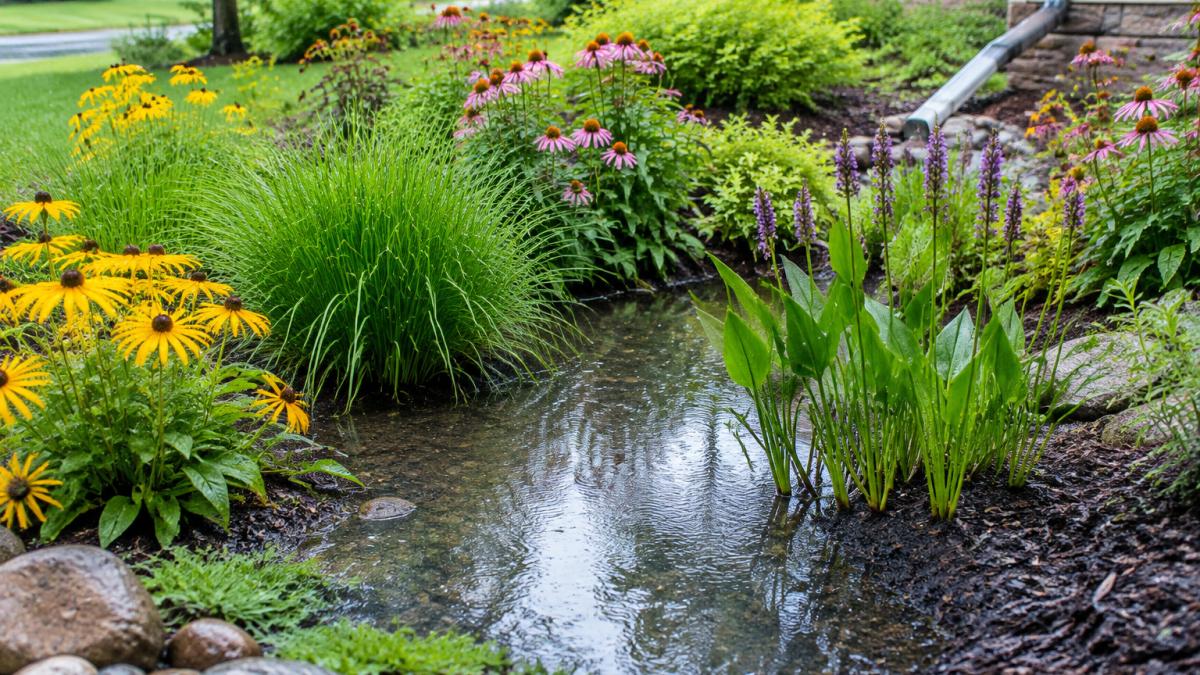
Wet Center Plants: Swamp Milkweed, Cardinal Flower, Blue Flag Iris
These three handle the wettest part of the basin, where water may stand for a day or two after a storm.
Swamp milkweed (Asclepias incarnata) blooms pink from June to August, reaches 3 to 4 feet tall, and tolerates saturated soil for extended periods. Its taproot pushes deep into the basin floor, improving infiltration right where water collects. It is a monarch host plant and a nectar source for native bees. Pricing depends on supplier, plant size, and quantity, so check current prices with your nursery or contact M7 LLC for a quote.
Cardinal flower (Lobelia cardinalis) puts on a striking show of red blooms from July to September and tolerates standing water. Pricing depends on supplier, plant size, and quantity. It is short-lived, often just two to three years, so let it reseed or plan to replant.
Blue flag iris (Iris versicolor) blooms blue-purple in late spring, reaches 2 to 3 feet, and filters pollutants well while handling heavy clay. Pricing varies by supplier and plant size. Give it room, because it spreads quickly by rhizome in good conditions and can crowd slower neighbors.
Edge and Slope Plants: Purple Coneflower, Black-eyed Susan, Golden Alexanders
The slopes and edges see moisture only in heavy rain, so they need plants that handle both wet and dry spells.
Purple coneflower (Echinacea purpurea) blooms from June to August, reaches 2 to 4 feet, and has a deep taproot that improves soil aeration. Plants typically start around $6.50 each. It will not survive permanent standing water, so keep it on the higher ground. Goldfinches feed on its seed heads in fall if you leave them standing.
Black-eyed Susan (Rudbeckia hirta) establishes quickly, blooms from June to September, and feeds native bees and birds. Plants usually start near $5.00 each.
Golden Alexanders (Zizia aurea) blooms early, April to June, giving pollinators an early food source before most rain garden plants open.
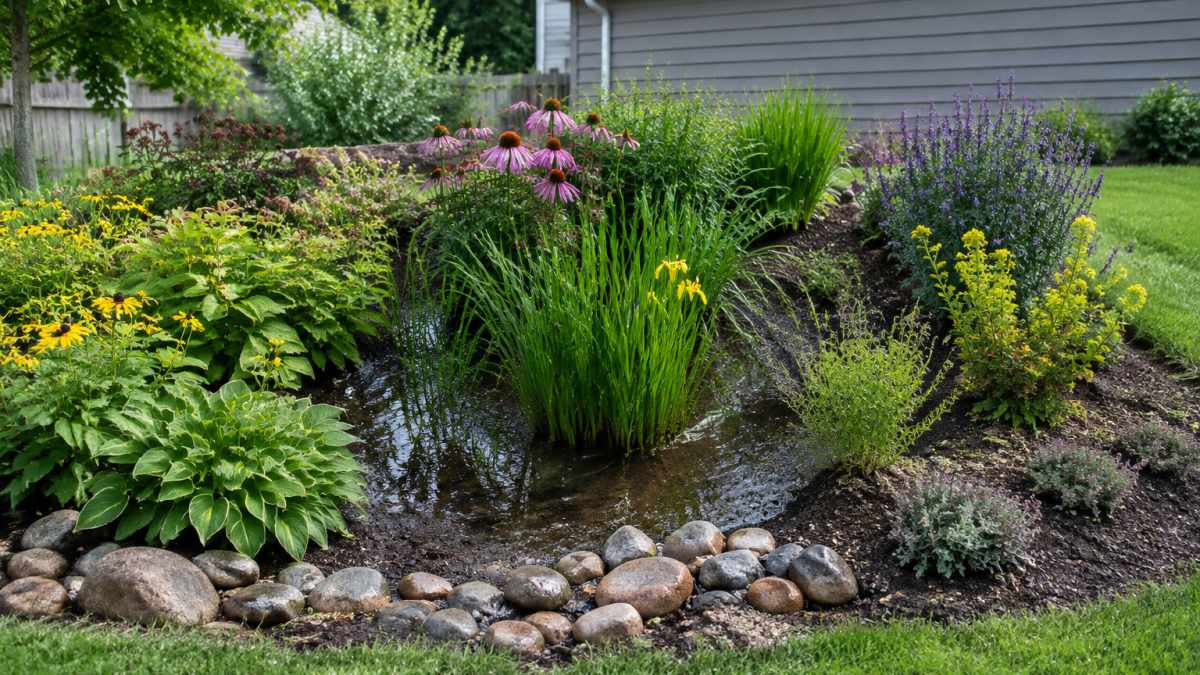
The table below summarises the three plants recommended for the wettest part of the basin, with the key trait for each.
| Plant | Bloom time | Key trait |
|---|---|---|
| Swamp milkweed | June to August | Taproot improves infiltration at the basin floor |
| Cardinal flower | July to September | Tolerates standing water; short-lived |
| Blue flag iris | Late spring | Filters pollutants; spreads quickly |
Deep Rooted Plants for Flooding and Why Roots Matter
Roots do the real work in a rain garden. A plant with deep roots creates channels in the soil that let water sink downward. Shallow-rooted lawn grass cannot do this well.
Joe Pye weed and buttonbush are two of the strongest root performers. Joe Pye weed has a large root system that improves soil structure. It is tall, so it fits best at the back of the garden and may need staking. Buttonbush is a woody shrub with a large root mass that helps prevent erosion.
Deep roots also keep the soil from washing out during storms, which protects the basin's shape over time.
Drought and Flood Tolerant Plants: Choosing Plants That Handle Both
Rain gardens swing between soaked and dry. A plant that only handles wet conditions may die during a summer drought, so look for species that cope with both.
New England aster is a good example. It tolerates heavy, damp soil and provides late-season nectar for pollinators. It can develop powdery mildew if air circulation is poor, so give it space.
Purple coneflower and black-eyed Susan also handle both extremes, which makes them dependable choices for the edges.
A practical rule: pick a mix of plants so the garden stays productive through wet springs and dry late summers.
Plants to Avoid and Common Planting Mistakes
Some mistakes come up again and again.
- Planting species that need permanent saturation. Rain gardens drain, so they will not support plants meant for ponds.
- Ignoring the slope. Placing a moisture-loving plant on the dry edge leads to a dead plant within one season.
- Skipping the percolation test. Without it, you may build a basin that never drains.
- Planting too densely. Native plants need room to spread. Crowding invites disease and weeds.
- Forgetting to water during establishment. New plants need regular watering for their first season, even in a rain garden.
If your yard has persistent drainage problems beyond the garden bed, the cause may be grading rather than planting. Our guide to how to fix backyard drainage issues covers the broader fixes, and our residential site grading cost guide explains what professional grading work involves.
Planting Your Rain Garden This Season
Spring and early fall are the best times to plant. Roots have time to establish before the weather turns extreme. But planting is only half the system, the other half is how you move water to the garden in the first place. Connecting the roof, hardscape, and planted bed into one drainage path is an effective approach to managing runoff.
Start with the basin, then work outward:
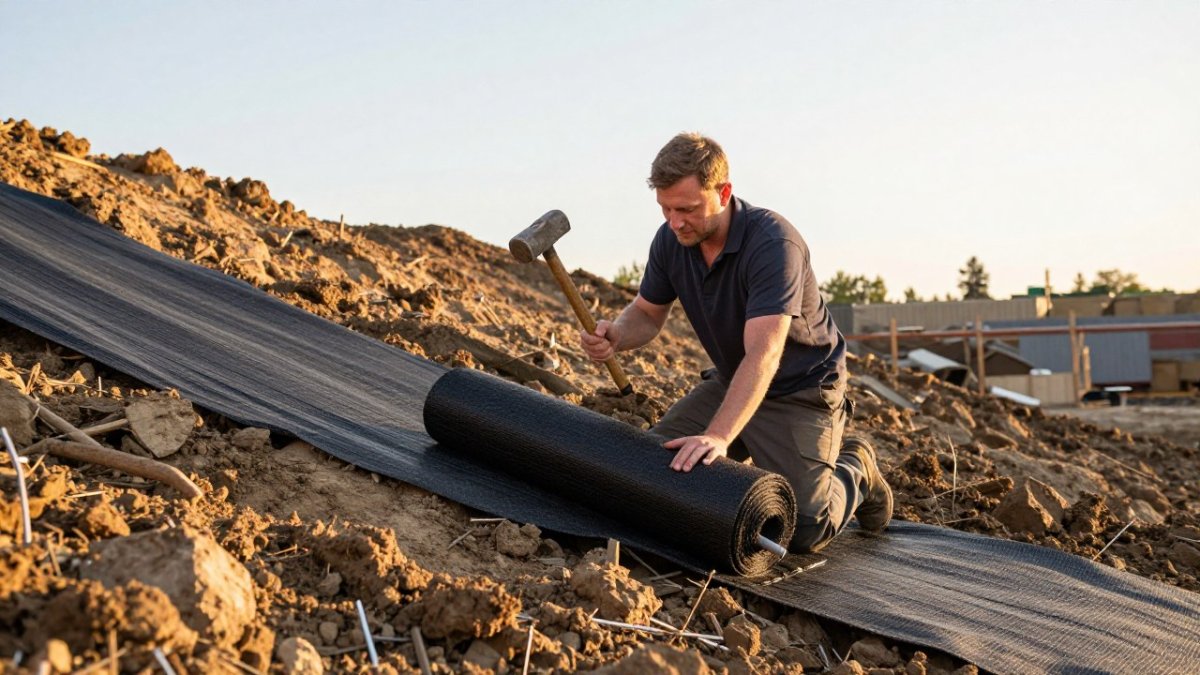
- Dig the basin to the depth your percolation test suggests, usually 4 to 8 inches.
- Mix compost into the native soil if it drains slowly.
- Place the wet-center plants first, since they need the lowest, wettest spots.
- Add the edge and slope plants, spacing them so they can spread.
- Mulch lightly with shredded wood, keeping it away from plant stems.
- Water deeply once a week during the first growing season.
Watch out: do not dig the basin on top of buried utility lines. Call 811 before any digging so the lines can be marked for free.
Connect the Roof and Hardscape to the Garden
A rain garden that only catches surface flow misses the biggest source of stormwater on most lots: the roof. A roof can shed a large volume of water from a single heavy rain.
Route downspouts to the garden with buried pipe or a surface swale, keeping the pipe sloped so water does not sit.
Permeable pavers on a patio or walkway near the garden can feed it too. Water passes between the pavers into a gravel base and then into the soil, reducing the volume that reaches the basin all at once.
Roofing and Drainage: What to Check Before You Plant
Before you commit to a garden location, look up at the roof.
For homes with persistent basement or foundation moisture, the fix may be roof drainage rather than planting.
If you are preparing the site for a larger project, or you want help shaping the basin correctly, book professional site excavation services to get the grading and digging done right the first time.
Soil and water problems are easier to solve before they spread. Start with a percolation test, match plants to their zones, connect the roof and hardscape to the basin, and give the garden one full season to settle in.
Frequently Asked Questions
What plants can help reduce flooding in rain gardens?
Plants with deep root systems and high water tolerance do the most work. Swamp milkweed, cardinal flower, and blue flag iris handle saturated soil in the wet center, while purple coneflower and black-eyed Susan suit the drier edges. Native plants generally outperform non-native species because their roots improve water infiltration and they need fewer pesticides and fertilizers once established. Plant a mix across zones so the garden absorbs runoff at every water level.
Can rain gardens prevent yard flooding?
A rain garden reduces standing water and runoff but does not eliminate every flood. It is designed to drain, so it captures stormwater from roofs and paved areas, then lets it soak into the ground over a day or two. Its effectiveness depends on soil percolation, the garden's size relative to the runoff area, and choosing plants that survive both wet and dry periods. Test your soil before building, and treat the garden as one part of a broader drainage plan.
What plants thrive in waterlogged soil conditions?
Swamp milkweed, cardinal flower, blue flag iris, and buttonbush tolerate prolonged saturation and periodic inundation. Plant them in the lowest part of the rain garden where water pools longest. Avoid placing drought-sensitive species in this zone, since they will rot. Blue flag iris can spread aggressively in ideal conditions, so monitor it and divide clumps as needed.
Are native plants better for rain gardens than non-native species?
In most cases, yes. Native perennials such as Joe Pye weed and New England aster develop deep root systems that improve soil structure and water infiltration, and they support local pollinators. Native plants also typically require fewer pesticides and fertilizers than traditional landscaping. Choose species suited to your region and check local extension guidance for plant lists that match your site conditions.