 how-to
How to Check Roofing Contractor License Status
Last Updated: November 5, 2026
Quick Summary
To check a roofing contractor license, search the official state licensing board's online lookup tool by the contractor's exact name or license number. Confirm the status is active, the expiration date is in the future, and the classification covers roofing work. Save the results before you sign any contract.
- Use the official state licensing board website, not a third-party directory.
- Confirm the license status is active and the expiration date has not passed.
- Make sure the license classification covers roofing, not only a different trade.
- Read any disciplinary actions and ask the contractor to explain them before signing.
- Verify insurance and bonding separately, since a license lookup covers only the license.
Table of Contents
- Why Verifying a Roofing Contractor License Matters
- Contractor License Check Online: Using the State Lookup Tool
- Roofing Contractor License Requirements by State
- How to Verify a Roofing Contractor Is Licensed, Step by Step
- Reading Status Labels and Disciplinary Records
- CSLB License Status Check Online: A Worked Example
- What to Do When a Roofing Contractor Cannot Be Found
- Your Next Step Before Signing a Roofing Contract
- Frequently Asked Questions
If you are hiring a roofer in Alabama, the first thing to confirm is that the company holds a valid license. Checking a roofing contractor's license status takes about ten minutes, and it can save you from paying for work that is not legally covered. This guide walks you through the check, step by step.
Why Verifying a Roofing Contractor License Matters
A roofing contractor license shows that a business has met the requirements set by its state licensing authority. Those requirements can include experience, exams, insurance and bonding. A licensed roofer is accountable to a regulator, and you have a route to file a complaint if the work goes wrong.
Many homeowners never check. They rely on a referral, a flyer or a friendly sales call. Those are not substitutes for primary-source verification. Confirming the license before you sign is the simplest protection you have.
Contractor License Check Online: Using the State Lookup Tool
Most state licensing boards run a free online search. You should look for the official board or licensing portal and search by the contractor's name or license number. The search returns the license type, current status, expiration date and any recorded actions against the license.
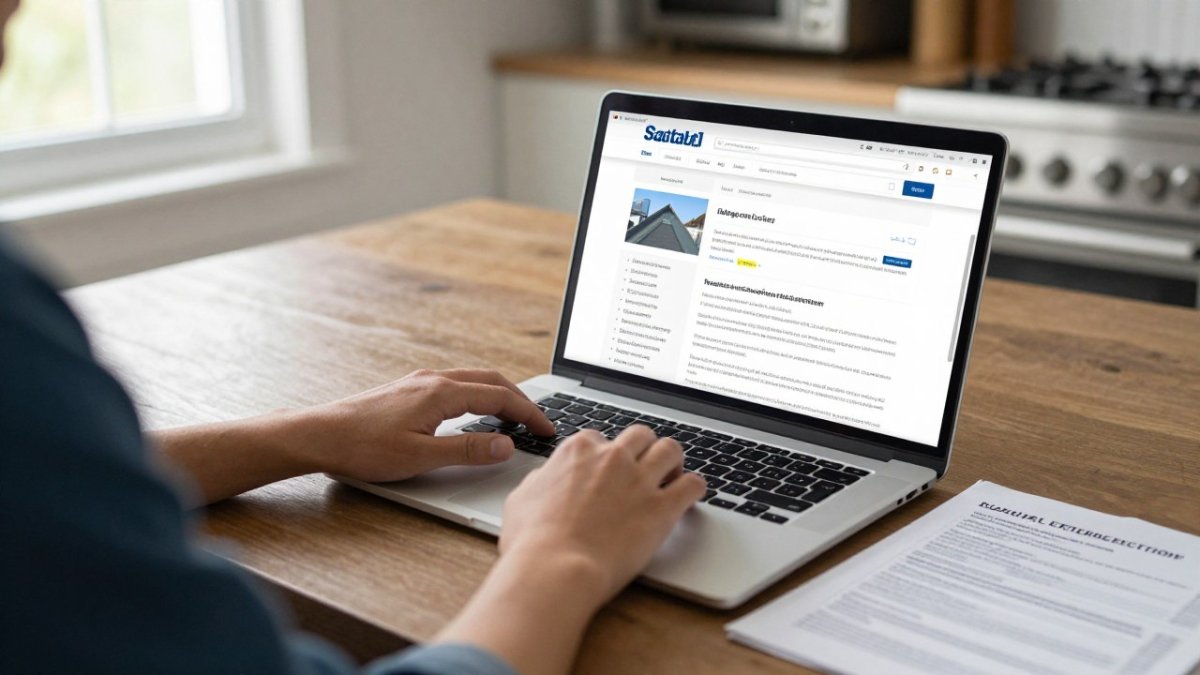
Here is a simple way to start:
- Find the official state licensing board website, not a third-party directory
- Enter the contractor's exact business or individual name
- Search by license number if the contractor gives you one
- Save or print the results page for your records
Watch out: a company name on a truck or website does not prove a license. Always check the record yourself.
Roofing Contractor License Requirements by State
Licensing rules for roofers are not uniform, and that is a common source of confusion for homeowners. Some states issue a specific roofing contractor license. Others license general contractors and treat roofing as a specialty classification under that umbrella. Some jurisdictions license at the county or municipal level rather than statewide. Before you search any database, you need to know which model applies to your project, because searching the wrong registry will return no match even for a fully licensed roofer.
A practical way to sort this out is to work from the license classification backward. Most state lookup tools display a classification or trade code next to the license number. Common roofing-related classifications include residential roofing, commercial roofing, and roofing specialty. If the record shows only a general building classification, the contractor may still be authorized to perform roofing work, but you should confirm the scope with the licensing board rather than assume it.
Here is how to confirm the requirements that apply to your job:
- Identify the licensing authority with jurisdiction. Start with the state board that regulates contractors, then check whether your county or city issues its own roofing registration or permit requirements on top of the state license.
- Look up the license classification definitions published by that authority. These definitions state which types of roofing work each classification covers, including repair versus replacement versus new installation.
- Confirm whether the license is required for the contract value or project type. Some jurisdictions exempt small repair jobs from licensing while requiring a license for full roof replacement.
- Check whether a separate permit is required for the work. A valid contractor license does not replace a building permit, and a roofer who skips the permit is a warning sign regardless of license status.
Watch out: a contractor who holds a valid license in a neighboring state or a different trade classification is not automatically authorized to perform roofing work on your project. Jurisdiction and classification both matter, and a license number alone does not prove either.
Because requirements and classifications change, verify the current rules directly with the licensing authority that governs your address. Do not rely on an older article, including this one, for the exact thresholds that apply to your job.
How to Verify a Roofing Contractor Is Licensed, Step by Step
Follow this workflow before you sign anything:
- Get the full legal name. Ask for the exact name on the license, and confirm it matches the contract.
- Get the license number. A reputable roofer will provide it without hesitation.
- Search the state database. Use the official lookup tool to confirm the license is active.
- Confirm the license type. Make sure the license covers roofing and not only a different trade.
- Check the expiration date. An expired license means the contractor cannot legally perform the work.
- Compare the details. The name, address and license number should match your quote.
Each step takes a minute or two. Together, they give you a clear answer.
Reading Status Labels and Disciplinary Records
The status field on a license record is the part most homeowners skim and most often misread. Each label carries a different legal meaning, and the difference matters when you are deciding whether to sign a roofing contract.
- Active means the license is current and the contractor is authorized to perform the work covered by that classification. Confirm the expiration date is in the future and that the classification matches roofing.
- Inactive usually means the licensee has asked the board to place the license on hold. The contractor may not legally perform work under an inactive license until it is reactivated.
- Expired means the renewal was not completed by the expiration date. An expired license is not authority to work, even if the contractor claims a renewal is pending.
- Suspended means the board has temporarily removed the right to work, often pending resolution of a complaint or failure to meet a requirement. Do not hire a contractor with a suspended license.
- Revoked means the board has permanently removed the license. A revoked license is the strongest warning a record can show.
Disciplinary records sit alongside the status field and deserve their own read. A record may show a complaint, an citation, a fine, a probationary period, or a formal action. Not every entry means the contractor is unsafe. A single resolved complaint about a paperwork delay is different from a pattern of actions tied to unlicensed activity, abandoned projects, or failure to carry required insurance. Read the dates, the number of entries, and the nature of each action together rather than reacting to one line.
A useful habit is to compare what the record shows against what the contractor tells you. Ask the contractor to explain any action on the record before you go further. A straightforward explanation with documentation is a reasonable response. Evasiveness, a claim that the record is a mistake, or an attempt to change the subject is a red flag.
Watch out: a clean license record does not confirm insurance, bonding, or complaint history with consumer protection agencies. Those are separate checks, and a license lookup covers the license only. Verify insurance and bonding directly with the insurer and the surety, and ask the licensing board whether it maintains a separate complaint history you can review.
CSLB License Status Check Online: A Worked Example
The California Contractors State License Board is a common reference point for how these lookup tools work. A typical search lets you enter a license number or business name and view the status, classification and any listed actions. The steps are similar to those in Alabama: find the official board site, enter the information, and read the results.
The example shows the general process. Your own search will use Alabama's official licensing portal, so follow the steps for that system.
What to Do When a Roofing Contractor Cannot Be Found
Sometimes the search returns no match. Try these steps before you assume the contractor is unlicensed:
- Check the spelling of the business name and try the owner's personal name
- Search by city or county if the database allows it
- Ask the contractor for the license number and enter it exactly, with no extra spaces
- Confirm you are on the official board website
If you still find nothing, do not sign a contract. Ask the contractor for written proof of licensure. If they cannot provide it, consider that a serious red flag.
Your Next Step Before Signing a Roofing Contract
Once you confirm the license, check the contractor's insurance and bonding separately. Ask for a current certificate of insurance and confirm it with the insurer. Then compare written quotes from several licensed roofers.
M7 LLC provides construction and landscaping services for residential and commercial properties, and we are happy to answer questions about your project. Contact our team for a consultation, and we can talk through the scope, timeline and next steps for your roofing needs.
Frequently Asked Questions
How do you know if a contractor is licensed?
Search the licensing authority's online lookup tool for the contractor's name or license number, then compare the license record to the business name on your estimate. Confirm the license is active, not expired or suspended, and that its classification covers roofing work. If the lookup shows no record, ask the contractor for their license number in writing and verify it directly with the board. Do not rely on a license number printed on a truck or a business card alone.
Do roofers have to be licensed?
Licensing requirements for roofing contractors vary by state and sometimes by city or county. Some states require a specific roofing license, while others use a general contractor license that must include roofing in its classification. Check with your state licensing board to confirm what applies where the work will be performed. Hiring an unlicensed roofer can leave you without recourse if the work fails, so confirm requirements before signing any agreement.
What should I do if a roofing contractor's license cannot be verified?
Do not sign a contract or make a deposit until the license is verified. Ask the contractor to confirm the exact legal business name and license number, then search the licensing board again. Check for spelling differences, a recently changed business name, or a license held by a different entity. If the contractor still cannot be verified, contact the state licensing board directly and consider choosing a different contractor.
Does a roofing contractor's license lookup also verify insurance?
No. A license lookup confirms that the contractor holds a license with the state or local board, but it generally does not show current liability insurance, workers' compensation coverage, or surety bond status. Ask the contractor for a current certificate of insurance and contact the insurer directly to confirm the policy is active. Check the board's complaint or disciplinary history separately, because that information may be listed in a different section of the record.