 how-to
How to Fix Backyard Drainage Issues: A 2026 Guide
Table of Contents
- Signs of Poor Yard Drainage You Should Not Ignore
- Yard Grading Techniques That Move Water Away from Your Home
- French Drain Installation Cost and What Drives the Price
- Surface Solutions: Swales, Dry Creek Beds, and Rain Gardens
- Subsurface Fixes: Trench Drains, Catch Basins, and Downspout Extensions
- DIY vs. Hiring a Pro for Backyard Drainage Issues
- HOA Rules, Permits, and Maintenance for Drainage Systems
- Frequently Asked Questions
Last Updated: September 21, 2026
Signs of Poor Yard Drainage You Should Not Ignore
Standing water that lingers more than a day after rain is the clearest sign of poor backyard drainage. Other warnings include soggy patches, a spongy lawn, and water pooling near your foundation. This guide walks through how to fix backyard drainage issues before they damage your home.
Watch for these red flags:
- Water that sits for 24 hours or more
- A musty smell in the yard or basement
- Mosquitoes that swarm in one spot
- Soil that pulls away from the foundation
- Cracks in your driveway or patio
Soil saturation is the root problem behind most of these. When water cannot drain down through the soil, it spreads sideways toward your house. That sideways push is called hydrostatic pressure, and it is what cracks foundations.
A common mistake is treating the symptom, not the cause. Soaking up a puddle does nothing if the water has nowhere else to go. You have to move water away, not just dry the surface.
Yard Grading Techniques That Move Water Away from Your Home
Yard grading is the practice of shaping soil so it slopes away from your home and toward a safe drainage point. The goal is a steady drop of about 6 inches over the first 10 feet from your foundation.
Here is how the work usually goes:
- Check your current slope with a level and a long board.
- Mark low spots where water collects.
- Add topsoil to build up the grade near the house.
- Tamp the soil down in thin layers.
- Recheck the slope after each pass.
Compaction matters more than most people think. Loose fill soil settles over time, so you pack it in small lifts. If you skip this step, your new slope flattens within a season.
Sandy loam grades and drains well. Heavy clay does not, and it often needs help from other fixes. For grading questions, the EPA's guidance on stormwater and runoff is a solid starting point.
French Drain Installation Cost and What Drives the Price
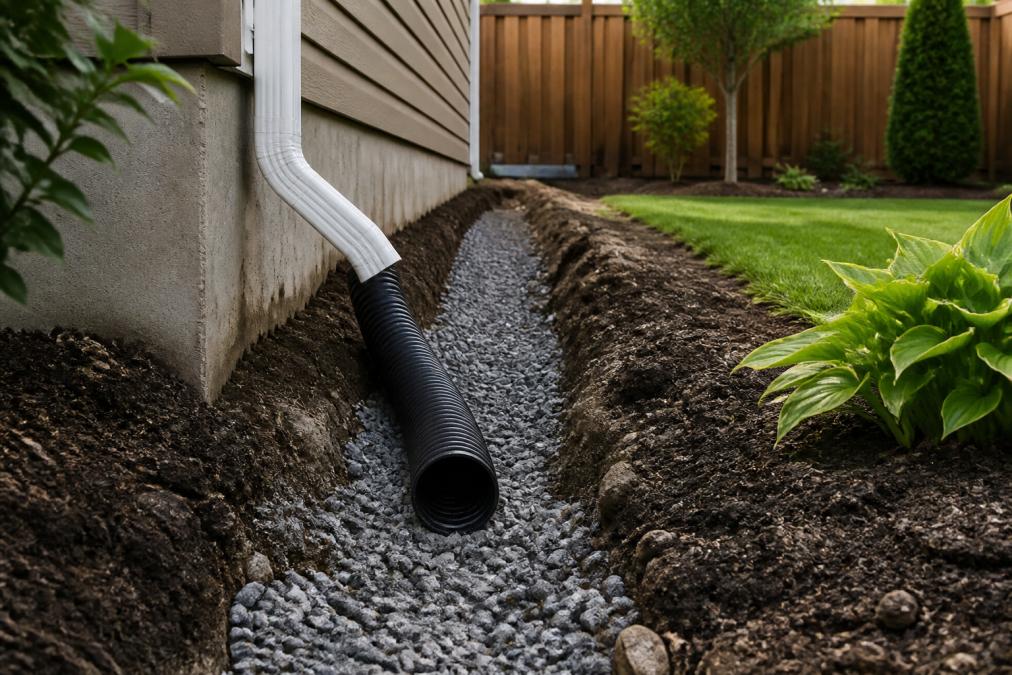
A French drain is a gravel-filled trench containing a perforated pipe wrapped in filter fabric. Water enters through the gravel, seeps into the pipe, and flows by gravity to a discharge point downhill or into a dry well. It solves subsurface water, the kind that keeps a lawn soggy days after rain, not surface puddling, which is a swale or regrading job.
Cost is driven less by the pipe and gravel than by the dirt you have to move. A common pattern in contractor estimates is that excavation, hauling, and disposal account for the majority of the bill, with materials a smaller share. That is why two yards of similar length can price very differently.
The real cost drivers, in order of impact:
- Trench length and depth. A 60-foot run at 18 inches deep moves roughly three times the soil of a 30-foot run at 12 inches. Deeper trenches also require shoring or wider cuts in unstable soil.
- Soil and rock conditions. Sandy loam digs clean. Heavy clay smears and needs wider trenches. Rock, roots, or buried debris can force a switch to a trencher or excavator, which changes the labor line entirely.
- Discharge point. Gravity is free; a pump is not. If your yard has no downhill outlet, you may need a dry well, a pop-up emitter, or a sump and pump, each adds equipment and a power source.
- Access. A gate narrower than the machine, a fence line, or a finished patio means hand digging or a smaller walk-behind trencher, both slower per foot.
- Restoration. Sod, mulch, pavers, and irrigation lines cut during the dig all have to be put back.
| Cost Driver | What Raises the Price | What Lowers It |
|---|---|---|
| Trench length | Long runs across the yard | Short, targeted runs |
| Soil type | Heavy clay, rock, roots | Sandy loam |
| Depth | Deep water table, frost line | Shallow surface water |
| Discharge | Pump required, no downhill | Gravity outlet exists |
| Access | Tight spaces, fences, hardscape | Open, clear yard |
| Restoration | Sod, pavers, irrigation repair | Bare soil, no hardscape |
DIY vs. pro, the honest threshold. A shallow run under about 30 feet in easy soil, with a downhill outlet and no utilities in the path, is a realistic weekend project for a homeowner with a shovel, a level, and a wheelbarrow. Beyond that, the math usually flips. Renting a trencher, hauling yards of gravel, and disposing of spoil can erase the savings, and a mis-graded trench that holds water instead of draining it is worse than no trench at all. Call a pro when the run is long, the soil is clay or rock, the discharge needs a pump, the trench crosses a utility corridor, or water is already threatening the foundation.
Before you dig, call 811. Every state operates an 811 call-before-you-dig service, and it is free.
M7 LLC provides site preparation and grounds work.
Surface Solutions: Swales, Dry Creek Beds, and Rain Gardens
Surface drainage moves water across the top of your yard instead of underground. A swale is a shallow, grassy channel that guides surface runoff to a low point. A dry creek bed is a swale lined with rocks that looks like a streambed and handles heavier flow.
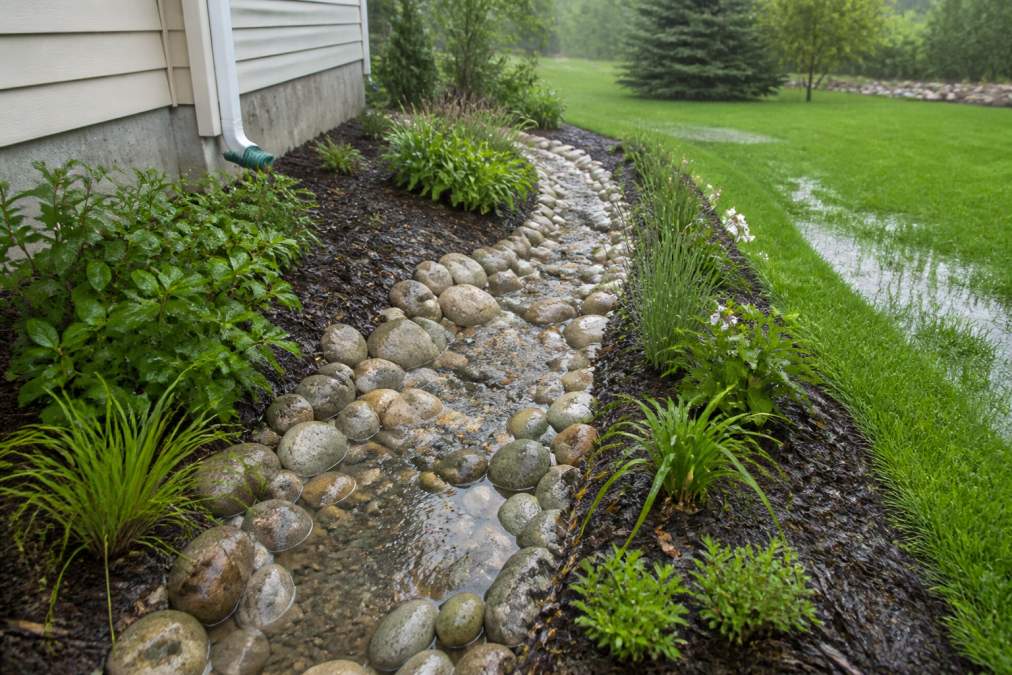
Each option fits a different job:
- Swale: Best for gentle slopes and light flow
- Dry creek bed: Best for visible paths and stronger flow
- Rain garden: Best for soaking up roof and driveway runoff
Subsurface Fixes: Trench Drains, Catch Basins, and Downspout Extensions
Subsurface drainage captures water below the surface and pipes it away. A trench drain is a grated channel set into the ground, often across a driveway or patio. A catch basin is a box that collects water and connects to a drainage pipe.
Common setups include:
- Trench drains for hard surfaces and driveways
- Catch basins at low points that tie into a pipe
- Downspout extensions to move roof water away
- Weeping tile around foundations to relieve pressure
DIY vs. Hiring a Pro for Backyard Drainage Issues
Small fixes are good DIY projects. Big ones usually are not. A downspout extension or a bit of regrading is manageable for most homeowners. A full French drain or a trench drain system is another story.
Consider DIY when:
- The fix is surface level and shallow
- You have the tools and a free weekend
- The yard is small and easy to reach
Call a pro when:
- You need to dig deep or cut through clay
- Water threatens your foundation
- The system ties into existing pipes
- You want the work done right the first time
HOA Rules, Permits, and Maintenance for Drainage Systems
This is the part most guides skip, and it is where homeowners get burned. Moving water off your yard is not automatically legal if it lands on someone else's.
Permit triggers. A permit is often required when you:
- Change the grade of your lot beyond minor landscaping
- Connect to a municipal storm sewer or curb inlet
- Disturb soil above your local erosion-control threshold
- Build a structure, retaining wall, dry well, or rain garden berm, that alters water flow
| Task | Frequency | Why It Matters |
|---|---|---|
| Clear gutters and downspouts | Twice a year, plus after leaf drop | Prevents overflow at the foundation |
| Inspect catch basins and grates | Every 3 months | Stops debris clogs before flooding |
| Flush the French drain outlet | Annually | Confirms water still exits, not just enters |
| Check the swale or creek bed | After heavy storms | Keeps the channel free of debris and erosion |
| Recheck the yard slope | Once a year | Catches settling before it reverses the grade |
| Aerate the lawn | Once a year | Improves percolation and reduces runoff |
| Photograph the system | After installation and each inspection | Documents condition for HOA and warranty questions |
Frequently Asked Questions
How much does it cost to fix backyard drainage?
The cost to fix backyard drainage depends on the method and yard size. Grading typically costs less than installing a French drain, which requires trenching, gravel, and perforated pipe. Surface solutions like swales or dry creek beds fall in the middle. Because pricing depends on labor, materials, and site conditions, get a written quote from a licensed contractor rather than relying on national averages.
Can I fix backyard drainage issues myself?
Some fixes are DIY-friendly, like extending downspouts or building a dry creek bed. Others, such as regrading or installing a French drain, require excavation and proper slope calculation. If your yard has standing water near the foundation or signs of hydrostatic pressure, hire a professional. Poor grading can make water problems worse and lead to expensive foundation repairs.
What are the signs of poor yard drainage?
Common signs include standing water after rain, soggy patches, soil erosion, and a damp or musty smell near the foundation. You may also notice water pooling near downspouts, cracked walkways, or mosquito swarms. If the soil stays saturated for days, that points to compaction or a high water table. Catching these signs early prevents structural damage.
Who do I call to fix a drainage issue in my yard?
Call a licensed landscaping or excavation contractor who handles drainage and grading. Look for someone experienced with French drains, swales, and catch basins. Ask for proof of insurance and examples of past work. A good contractor will assess your yard's slope, soil type, and water table before recommending a solution, not just quote a one-size-fits-all fix.
Water that pools near your home will not fix itself, and the damage grows with every storm. M7 LLC delivers professional construction and landscaping services, from comprehensive site preparation to durable grounds work built to last. Our team handles everything from small residential drainage fixes to full site prep for new builds. Get started with M7 LLC and protect your property with drainage solutions designed to last.