 how-to
How to Hire Reliable Contractors for Renovations
Quick Summary
Hiring reliable contractors starts with building a shortlist of three to five candidates and verifying their state license, general liability insurance, and workers' compensation coverage before anyone visits your home. Compare written, itemized bids on the same scope, and get a contract that spells out payments, change orders, and warranty terms.
- Start with at least three to five candidates so you have something to compare.
- Confirm license status, general liability, and workers' comp in writing before meeting.
- Re-check insurance before the crew mobilizes and again before final payment.
- Normalize every bid to the same scope, materials, and exclusions before comparing totals.
- Get every change in scope approved in writing before work proceeds.
Table of Contents
- Step 1: Build a List of Candidate Contractors
- Step 2: Verify Licenses and Insurance Before You Meet
- Step 3: Use a Hiring a Contractor Checklist to Screen Candidates
- Step 4: Ask the Right Questions Before Hiring Contractors
- Step 5: Learn How to Compare Contractor Bids Line by Line
- Step 6: Know What to Include in a Renovation Contract
- Your Next Step: Scheduling Site Visits and Written Estimates
- Frequently Asked Questions
How to Hire Reliable Contractors for Renovations
Last Updated: November 7, 2026
Hiring the wrong contractor is one of the most expensive mistakes a homeowner can make, which is why hiring reliable contractors matters so much. The Associated Builders and Contractors estimated that the construction industry would need 349,000 net new workers in 2026 to meet demand for construction services (EXTERNAL_LINK: Associated Builders and Contractors workforce estimate | https://www.abc.org). With that kind of demand, quality crews are busy, and not every company is equally qualified. M7 LLC has put together this step-by-step guide to help you find and vet contractors for your renovation project, so you can avoid delays, disputes, and unfinished work.
Step 1: Build a List of Candidate Contractors
Start with at least three to five candidates. A short list gives you something to compare, and it protects you if one company turns out to be a poor fit. Ask friends, neighbors, and local suppliers who they have used. For examples of well-regarded roofing contractors to consider, see top roofing contractors in Alabama. Check your state licensing board's directory and read recent online reviews, looking for patterns rather than single complaints.
Watch for these early warning signs:
- No physical business address or local phone number
- Pressure to sign on the spot
- Requests for full payment before any work starts
- Unmarked vehicles or no company name on paperwork
Your shortlist is also a good place to compare how each company answers basic questions. Clear, quick answers are one of the simplest ways to tell which firms are worth hiring for your roof.
Step 2: Verify Licenses and Insurance Before You Meet
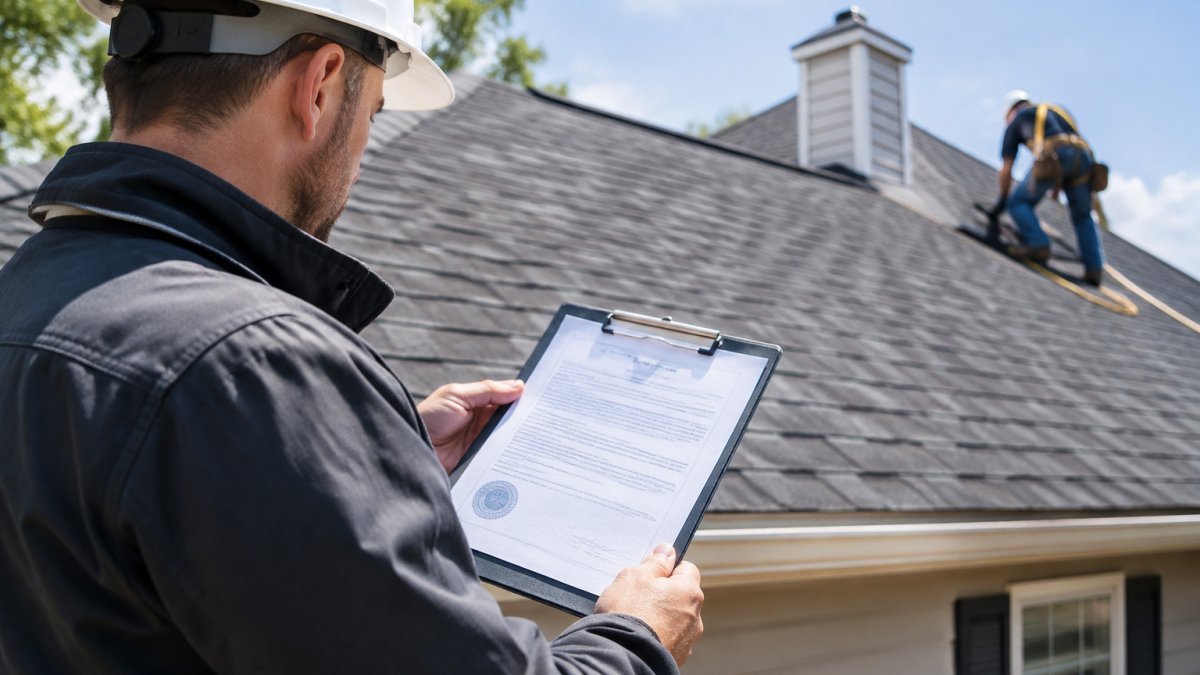
Roofing work sits at the intersection of structural, weatherproofing, and fall-safety risk, so verification is not a formality. Before anyone walks your roof, confirm three things in writing: the contractor's state license status, general liability coverage, and workers' compensation coverage. To look up a roofing contractor's license status right away, see check license status. Ask for the license number, the certificate of insurance, and the name of the insurer's agent who can confirm the policy is active.
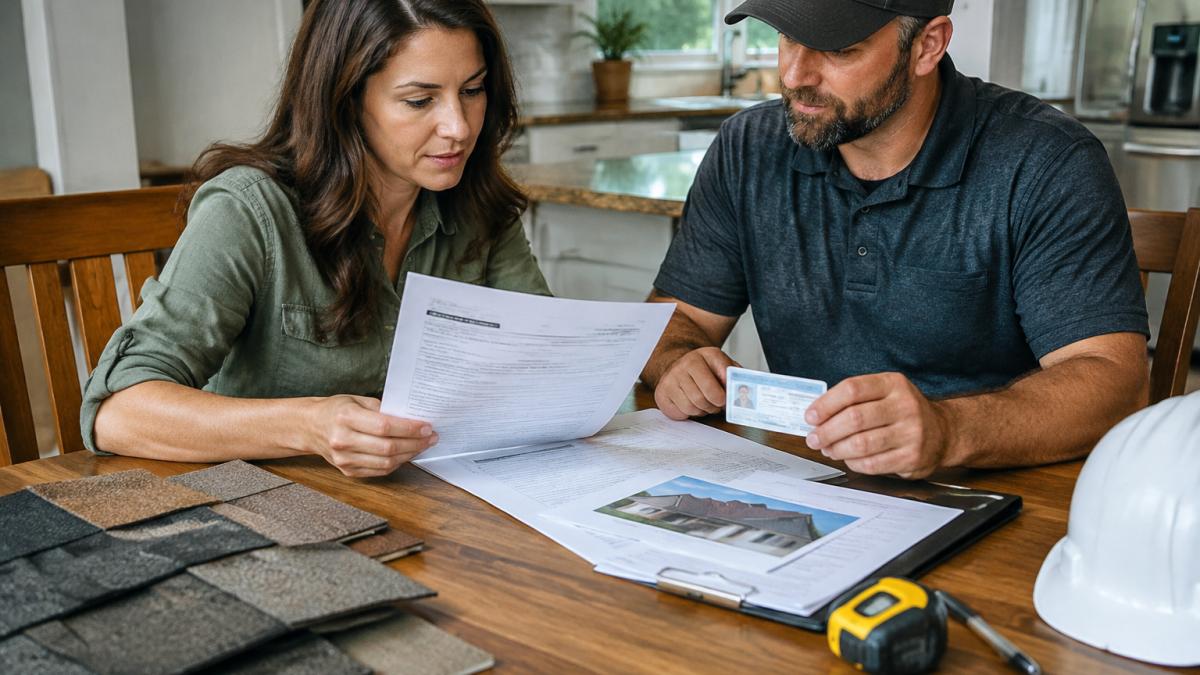
Run the checks in this order so nothing slips through:
- License status. Look up the license number in your state's licensing board database and confirm the license is active, the business name matches the contract, and the license class covers roofing (repair, replacement, and installation are sometimes separate endorsements). Note the expiration date and any public disciplinary actions.
- General liability. Request a certificate of insurance and call the agent listed on it, not a number the contractor provides. You can learn how to verify contractor insurance coverage before the crew arrives. Confirm the policy is current, the limits are adequate for a roof replacement, and the certificate names you or your property as an additional insured if your contract requires it.
- Workers' compensation. Ask for the workers' comp certificate and confirm it covers the crew who will actually be on your roof. If the contractor claims an exemption, ask for the exemption certificate and verify it with the state workers' compensation board.
- Subcontractor coverage. Roofing crews often use subcontractors. Ask whether subs carry their own liability and workers' comp, and request certificates for any sub scheduled on your job.
Watch out: a certificate of insurance is only evidence of coverage on the date it was issued, policies can lapse or be canceled mid-project, so re-confirm coverage before the crew mobilizes and again before final payment.
Keep copies of every document in a project folder. If a dispute arises later, the license record and insurance certificates are the first things an insurer or regulator will ask for.
Use this summary to check the four credentials to confirm before a contractor walks your roof.
| Check | What to confirm | Where to get it |
|---|---|---|
| License status | Active, business name matches, roofing class covered | Your state licensing board database |
| General liability | Current policy, adequate limits, additional insured if required | Certificate of insurance, verified with the listed agent |
| Workers' compensation | Covers the crew on your roof | Certificate, or exemption certificate checked with the state board |
| Subcontractor coverage | Subs carry their own liability and workers' comp | Certificates for each sub on your job |
Step 3: Use a Hiring a Contractor Checklist to Screen Candidates
A written checklist keeps your comparison fair. Score each candidate on the same points so you are not swayed by a charming sales pitch alone. Useful criteria include:
- Years in business and recent projects similar to yours
- References from homeowners you can call
- Clear, written estimates
- Proof of licensing and insurance
- Responsiveness during the first contact
Visit at least one completed project if you can. Seeing finished work tells you more than any brochure. Note who arrives on time, who explains things clearly, and who leaves the site tidy.
Step 4: Ask the Right Questions Before Hiring Contractors
Good questions reveal how a contractor plans and communicates. Ask:
- Who will supervise my project day to day?
- What is your typical timeline, and how do you handle delays?
- Which subcontractors will you use, and are they insured?
- How will you handle permits and inspections?
- What warranty do you offer on labor and materials?
- How often will you update me, and in what form?
Listen for specific answers. Vague responses such as "we'll figure it out" often lead to surprises later. A reliable contractor will explain the process without hesitation.
Step 5: Learn How to Compare Contractor Bids Line by Line
Roofing bids are rarely apples to apples. One contractor may price a tear-off and full replacement, another may propose a layover, and a third may exclude decking repair, ridge venting, or disposal. The only fair comparison is to normalize every bid to the same scope before you look at the total.
Build a comparison sheet with one column per contractor and these rows:
- Scope of work. Tear-off vs. layover, number of squares, roof pitch and complexity, valleys, penetrations, and whether ice-and-water shield and underlayment are included.
- Materials. Manufacturer, product line, and grade for shingles, underlayment, flashing, and ventilation. A bid that names a brand and product line is easier to compare than one that says "architectural shingles."
- Decking and structural repair. Ask for a per-sheet price for decking replacement and a stated allowance, since rotten decking is often discovered after tear-off.
- Ventilation and flashing. Confirm ridge vent, soffit vent, step flashing, and chimney flashing are itemized rather than lumped into "miscellaneous."
- Permits and inspections. Who pulls the permit, who pays the fee, and who schedules the inspection.
- Disposal and cleanup. Dumpster, tear-off disposal, magnetic nail sweep, and landscaping protection.
- Exclusions and allowances. List every exclusion in writing and convert allowances to a stated dollar figure so you can compare them.
- Contingency. Ask what percentage is built in for unforeseen conditions and how it is billed if unused.
- Payment schedule and warranty. Tie payments to milestones and compare labor and material warranty terms side by side.
Once the sheet is filled in, compare totals only after adjusting for scope differences. For more on evaluating roofing contractor quotes, read how to evaluate contractor quotes. If one bid is far below the others, ask the contractor to identify what is excluded rather than assuming the price is a bargain. A written, itemized estimate makes these differences visible; a one-line quote does not.
Step 6: Know What to Include in a Renovation Contract
A written contract protects both sides. Before you sign, make sure it includes:
- A detailed description of the project scope and materials
- Start and completion dates, with milestones
- A payment schedule tied to completed work, not calendar dates
- Permit responsibilities and who schedules inspections
- A process for change orders, approved in writing before work proceeds
- Warranty terms and how disputes will be resolved
- The contractor's license and insurance information
Never agree to a verbal change in scope. Get every change in writing with its cost and effect on the timeline.
Your Next Step: Scheduling Site Visits and Written Estimates
Once you have a short list of verified contractors, schedule site visits so each one can see the full scope in person. For guidance on requesting a written renovation quote, read get a quote for home renovation. Ask every candidate for a written estimate based on the same details. With licensed, insured candidates and clear written bids, you can make a confident decision. M7 LLC can walk through your project, provide an itemized estimate, and explain each step of the process. Contact us to schedule your site visit and start planning your renovation.
Frequently Asked Questions
What is the best way to find a reliable contractor?
Start with referrals from neighbors, friends, and local suppliers who see contractors' work on job sites. Then check each name against your state licensing board and at least three recent references. Build a shortlist of three to five firms before requesting estimates. Avoid choosing from paid advertising alone, since placement does not reflect workmanship or reliability.
What are red flags when hiring a contractor?
Watch for requests for a large upfront deposit, pressure to sign quickly, refusal to provide proof of insurance or a license number, and estimates that are far below every other bid. Be cautious if the contractor asks for cash only or wants payment to a personal account. A vague written scope or no written contract is another common warning sign for renovation work.
How do you compare contractor bids fairly?
Give every contractor the same written scope, drawings, and material list so the bids cover identical work. Compare line items for labor, materials, permits, cleanup, and contingency rather than only the total. A much lower bid often omits items or uses cheaper materials, so ask each contractor to explain any large gaps in price.