 ultimate-guide
Managing Multi-Unit Property Landscaping: A Complete Guide
Table of Contents
- Why Managing Multi-Unit Property Landscaping Matters
- Creating a Landscape Maintenance Plan for Property Managers
- Building a Landscaping Checklist for Rental Properties
- Landscaping Vendor Management: Selection and Oversight
- Multifamily Common Area Landscaping Strategy
- Technology and Sustainability in Landscape Management
- Budgeting and ROI for Multi-Unit Landscaping
- Frequently Asked Questions
Last Updated: October 7, 2026
Why Managing Multi-Unit Property Landscaping Matters
This guide covers the complete framework for managing multi-unit property landscaping: building a maintenance plan, vetting contractors, managing contracts, and measuring ROI.
Creating a Landscape Maintenance Plan for Property Managers
Your plan should specify who performs each task. Larger properties often benefit from a primary vendor plus specialists (turf, tree care, irrigation); smaller ones may work with a single full-service contractor.
Routine Maintenance Scope and Frequency
| Maintenance Task | Frequency | Responsibility |
|---|---|---|
| Mowing and edging | Weekly to bi-weekly (growing season) | Primary landscaping vendor |
| Weed control | Ongoing, intensive spring/fall | Primary vendor or specialist |
| Bed maintenance and mulching | Weekly weeding, annual mulch refresh | Primary vendor |
| Irrigation inspection and adjustment | Monthly during season, pre-season check | Irrigation specialist or vendor |
| Hardscape cleaning | Weekly or bi-weekly | Primary vendor |
| Aeration and fertilization | 1-2 times annually | Turf specialist or vendor |
Seasonal Cleanup and Preparation
Winter management is minimal but important: avoid heavy foot traffic on dormant turf, clear snow and ice from walkways promptly, and monitor drainage so meltwater doesn't pool. In mild climates, dormant-season pruning is ideal.
Building a Landscaping Checklist for Rental Properties
Seasonal checklist items appear in the maintenance plan. The key is consistency, use the same checklist every time so you catch problems early.
Common Area Maintenance Tasks
Parking areas are visible to every resident but often overlooked. Keep them clear of debris, repair cracks promptly, manage weeds, ensure drainage, and keep bordering landscaping neat.
Liability and Risk Management Checkpoints
Document all maintenance and repairs. When liability issues arise, your records prove you took reasonable steps to maintain the property safely.
Landscaping Vendor Management: Selection and Oversight
Your landscaping vendor is critical to success: the right one delivers quality work on time and communicates proactively, while the wrong one wastes money.
Vetting Contractors and Setting Expectations
Once you select a vendor, set clear expectations in writing. The contract should specify:
- Scope of work (exact tasks, frequencies, performance standards)
- Response time for emergency issues
- Equipment and techniques they'll use
- Communication protocol (who you contact, how often they report)
- Quality standards (what "well-maintained" means for turf, beds, hardscape)
- Liability and insurance requirements
- Termination clause if performance doesn't meet standards
Managing Contracts and Communication
Review the contract annually and adjust scope or frequency as needs change. Expect modest rate increases if vendor costs rise, but don't accept large increases without justification.
Multifamily Common Area Landscaping Strategy
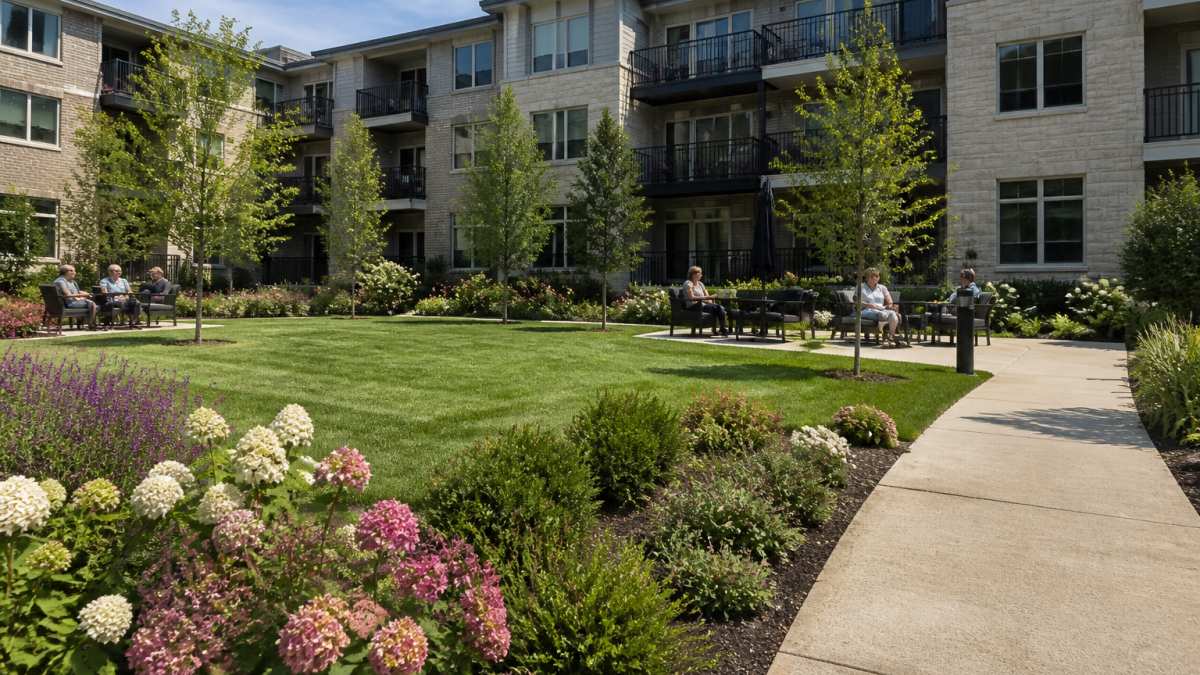
Common area landscaping is the face of your property, affecting how tenants feel about where they live and whether they renew leases.
Curb Appeal and Property Value Enhancement
Select durable, low-maintenance plantings. Native plants adapted to your climate need less water, fertilizer, and pest management, reducing vendor costs and looking better year-round.
Tenant Retention Through Quality Grounds
Communicate improvements. Let tenants know about new plantings, irrigation upgrades, or hardscape repairs, this justifies rent levels and builds goodwill.
Technology and Sustainability in Landscape Management
Water conservation is increasingly important: install smart irrigation controllers, fix leaks promptly, choose drought-tolerant plantings, and reduce turf in favor of hardscape or natives where appropriate.
Budgeting and ROI for Multi-Unit Landscaping
M7 LLC provides expert construction and landscaping services designed to meet your property's unique needs. From new construction and renovations to comprehensive site preparation and grounds work, we deliver high-quality results built to last. Trust our professional team to enhance your space with reliable, durable solutions tailored for excellence.
Frequently Asked Questions
How often should landscaping be maintained at a multifamily property?
Most multifamily properties require weekly mowing during growing season, bi-weekly trimming and edging, and monthly deep cleaning of hardscape areas. Seasonal tasks, leaf cleanup, mulch refreshment, and irrigation winterization, occur quarterly. Frequency depends on climate, plant density, and tenant expectations. A documented maintenance plan prevents gaps and ensures consistent curb appeal across all units.
What should a property manager include in a landscaping vendor agreement?
A vendor agreement must specify scope (mowing, trimming, fertilization, pest control), frequency, response times for emergencies, insurance requirements, liability coverage, seasonal adjustments, and communication protocols. Include performance benchmarks, how the property should look after each service. Define who handles irrigation repairs, debris removal, and snow management. Require proof of licensing and bonding. Set clear escalation procedures for quality issues and payment terms to protect both parties.
How can property managers keep landscaping consistent across multiple rental properties?
Use a standardized maintenance checklist applied to all properties, hire one primary vendor or a vetted network of contractors, and conduct monthly site inspections with photo documentation. Implement a digital maintenance schedule accessible to all staff. Establish the same plant selection and hardscape standards across properties. Schedule regular vendor check-ins and require before-and-after photos for major work. Consistent branding through uniform landscaping strengthens property identity and simplifies budgeting.
What landscaping improvements can help improve curb appeal at a multifamily property?
Prioritize turf health, seasonal plantings, and hardscape maintenance, these deliver immediate visual impact. Add native plantings for sustainability and lower maintenance costs. Refresh mulch beds annually, install or upgrade landscape lighting, and ensure drainage systems prevent standing water. Power-wash entryways and pathways monthly. Maintain clear sightlines around signage and entries. Strategic tree care and arboriculture improve scale and maturity. These improvements directly influence tenant satisfaction, retention rates, and property value.
How do you create a landscaping maintenance plan for multiple properties?
Start with a site assessment of each property, document existing plants, soil conditions, irrigation systems, and drainage. Define maintenance goals: curb appeal, tenant satisfaction, water conservation, or ROI. Establish a monthly, seasonal, and annual task calendar. Assign responsibilities to vendors or in-house staff. Set performance metrics and inspection schedules. Budget for emergencies and preventative maintenance. Use property management software to track work orders, expenses, and vendor performance. Review the plan quarterly and adjust based on seasonal changes and tenant feedback.
What is the rule of 3 in landscaping?
The rule of 3 refers to designing with odd-numbered groupings, plant three shrubs, three trees, or three accent colors rather than even numbers. This creates visual balance and feels more natural to the human eye. Applied to multifamily properties, it helps landscapers and managers plan cohesive, aesthetically pleasing common areas that enhance curb appeal without appearing overly formal or cluttered. It's a simple principle that improves landscape architecture across multiple units.
What does a property manager do to maintain landscaping at a multifamily property?
Property managers oversee vendor selection, approve maintenance plans, monitor work quality through regular inspections, manage budgets, handle tenant complaints about grounds, and ensure compliance with lease requirements. They coordinate seasonal tasks like irrigation winterization and spring cleanup, track expenses, and document all work with photos. Managers also communicate expectations to contractors, resolve issues quickly, and adjust maintenance based on weather or property needs. Their role bridges tenant satisfaction, contractor accountability, and financial control.