 ultimate-guide
Benefits of Professional Site Preparation for Alabama Projects
Quick Summary
Professional site preparation turns raw land into a buildable lot by clearing, grading, compacting, and draining the ground before construction starts. Done properly, it improves safety, keeps schedules on track, controls costs, and protects the structure, including the roof, from water problems that often begin below the roofline.
- Surveying and soil assessment reveal conditions that determine how the rest of the site preparation work should proceed.
- Compaction is checked in lifts, because loose or uneven fill is a common cause of settlement.
- Confirm the building pad, grades, and drainage before the roofing crew mobilizes to avoid costly rework.
- Put in writing who handles staging, debris removal, and final grade before the roofing crew arrives.
- Choose a contractor with verified licensing and insurance, and get a written scope that lists exclusions.
Table of Contents
- Why Site Preparation Matters Before Construction Begins
- Benefits of Hiring Professional Site Preparation Contractors
- Construction Site Preparation Steps, From Survey to Grading
- Site Preparation Checklist for Property Owners
- Site Preparation Timeline and How Delays Are Prevented
- How to Evaluate a Site Preparation Contractor
- Booking Your Site Preparation Assessment with M7 LLC
- Frequently Asked Questions
Why Site Preparation Matters Before Construction Begins
Last Updated: November 8, 2026
Site preparation is the work that turns raw land into a buildable lot, and it is where many residential and commercial projects are won or lost. At M7 LLC, we treat site preparation as the foundation of every build, because the decisions made before the first footing is poured determine how smoothly the rest of the project runs.
Site preparation is the set of activities that clears, levels, and stabilizes a property so construction can begin safely and to plan. It typically includes site surveying, vegetation and debris removal, excavation, grading, and drainage work. Skipping or rushing any of these steps tends to surface later as cracked slabs, shifting foundations, or water pooling where it should not.
Many homeowners in Alabama underestimate how much ground conditions vary, even within a single lot. Clay soils, fill from previous construction, and sloped terrain each call for different handling. Thorough preparation accounts for those differences before the build starts, rather than leaving the team to react once equipment is on site.
The reasons to get this stage right are practical. Poor preparation is a common source of rework, and rework adds cost and schedule pressure. Unstable subgrade can compromise a foundation over time, and inadequate drainage can lead to moisture problems that affect the structure for years. Approaching site preparation as a planned phase, not an afterthought, is what separates a predictable project from an expensive one.
Benefits of Hiring Professional Site Preparation Contractors
Hiring a professional site preparation contractor shifts the risk of getting the groundwork wrong away from the property owner. On a roofing project, that risk is concentrated in a few places: the stability of the ground around the structure and the drainage that determines whether water reaches the roof edge or the foundation first.
The most visible benefit is safety. Excavation and heavy equipment work carry real hazards, including trench collapse, buried utility strikes, and equipment accidents. Professional crews follow established safety practices and plan access routes and work zones before mobilizing.
Professionals also keep projects on schedule. Sequencing clearing, grading, and drainage in the right order prevents crews from having to redo completed work. A well-run site preparation phase helps avoid the delays that ripple into framing, utility connections, and inspections.
Cost control is another practical advantage. Early mistakes are expensive to correct. Moving soil that was graded incorrectly, repairing damage from poor drainage, or redoing compaction after a failed inspection all add cost. A contractor who scopes the work accurately at the outset reduces those surprises.
Site preparation that is properly compacted, graded, and drained supports the long-term performance of the structure beneath it. Properly compacted, graded, and drained ground protects the foundation and the landscaping built around it, and it keeps water moving away from the roof edge rather than pooling against the fascia and soffit. That matters because roof problems are often water problems that start below the roofline.
A less obvious benefit is documentation. Documenting grades, compaction results, and utility locates gives the owner a record if a question arises later about drainage, settlement, or damage. That record is also useful when a roofing contractor or inspector needs to understand how the site was prepared before the roof was installed.
Construction Site Preparation Steps, From Survey to Grading
A reliable site preparation process moves in a logical order, with each stage building on the one before. Working through it in sequence keeps the project predictable.
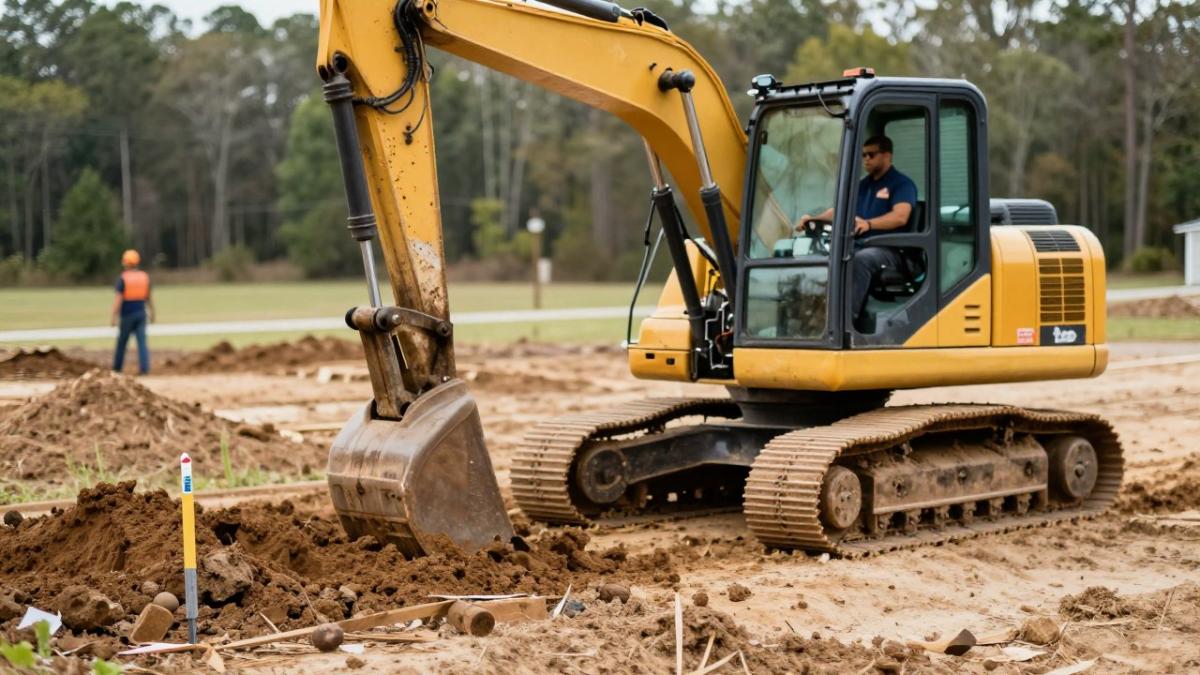
Site Surveying and Soil Assessment
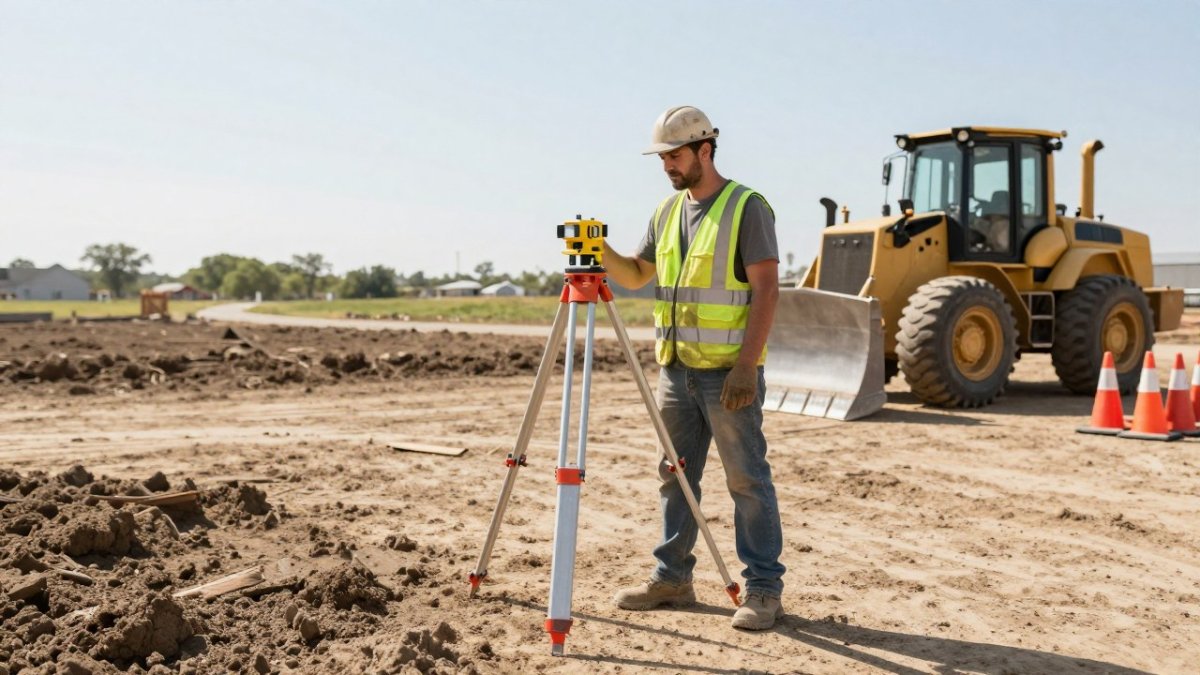
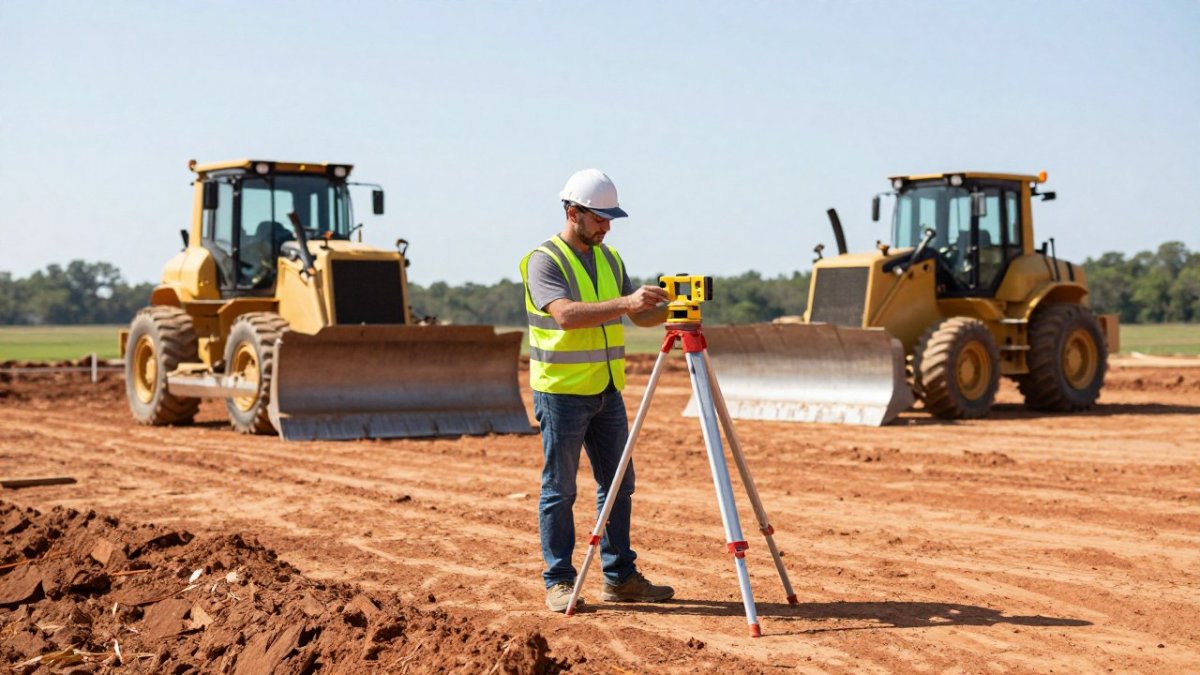
The process starts with a survey. A surveyor establishes property boundaries, elevations, easements, and the locations of existing utilities. Soil assessment follows, using test borings or probes to understand bearing capacity, moisture content, and the presence of fill or unsuitable material. For projects where the soil conditions are uncertain, a geotechnical report gives the design team the data they need to size foundations and drainage correctly.
This stage determines what the rest of the work looks like. Weak or expansive soils may require removal, stabilization, or a different foundation approach. Discovering those conditions during the survey is far less costly than discovering them after the slab is poured.
Land Clearing, Debris Removal and Grading
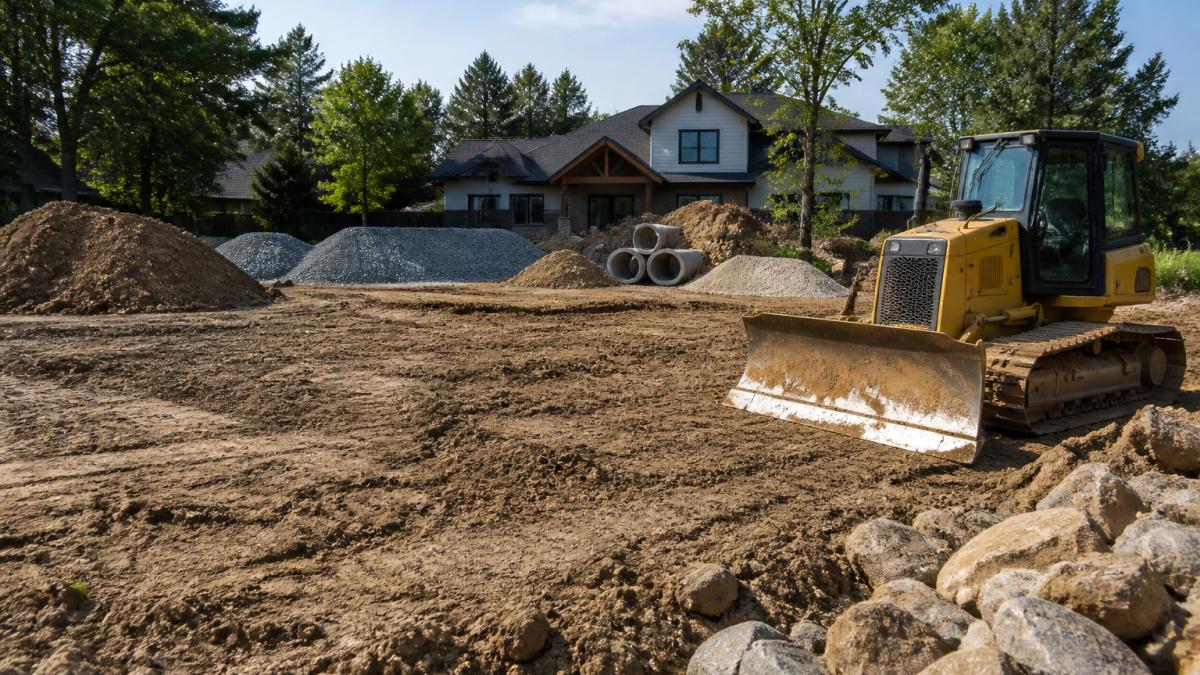
Once the survey is complete, crews clear vegetation, remove trees and stumps within the work area, and haul away debris. Topsoil is typically stripped and stockpiled for reuse in landscaping, since it is poor material for structural fill.
Grading comes next. Crews cut and fill to achieve the design elevations, direct surface water away from the structure, and compact the subgrade in lifts to specified density. Proper compaction is one of the most important quality checks in the process, because loose or uneven fill is a common cause of settlement. A common mistake is grading the building pad correctly while neglecting the slope of the surrounding lot, which can send runoff straight toward the foundation.
Site Preparation Checklist for Property Owners
Use this checklist to confirm that the key elements of site preparation are covered before construction begins:
- Property survey completed, with boundaries and easements marked
- Underground utilities located and marked before any excavation
- Soil tested, and geotechnical findings reviewed where conditions are uncertain
- Vegetation, stumps, and debris cleared from the work area
- Topsoil stripped and stockpiled for later use
- Grading plan confirmed, with drainage directed away from the structure
- Subgrade compacted to the specified density in lifts
- Erosion control measures in place for disturbed areas
- Access routes and staging areas planned for equipment and materials
- Permits and required inspections identified and scheduled
Working through this list with your contractor before mobilization helps ensure nothing is overlooked. Local permitting requirements vary, so confirm the specifics with the relevant county or municipal office for your property.
Site Preparation Timeline and How Delays Are Prevented
The timeline for site preparation depends on the size of the lot, the complexity of the grading, the soil conditions, and weather. A small residential lot with straightforward grading may be ready in a matter of days, while a larger site with significant fill, tree removal, or drainage work can take considerably longer. Because these variables differ from project to project, a realistic schedule is built from the survey findings rather than from a generic estimate.
A reliable sequence moves in a logical order, and each stage should be finished and checked before the next begins. The sequence generally runs as follows:
- Site assessment and survey. A licensed surveyor establishes property boundaries, elevations, easements, and existing utilities. Soil assessment follows, using test borings or probes to understand bearing capacity, moisture content, and the presence of fill or unsuitable material.
- Permits and utility locating. Confirm required permits and inspections with the relevant county or municipal office, and have underground utilities located and marked before any excavation.
- Clearing and debris removal. Crews clear vegetation, remove trees and stumps within the work area, and haul away debris. Topsoil is stripped and stockpiled for reuse in landscaping.
- Grading and cut-and-fill. Crews cut and fill to the design elevations and direct surface water away from the structure.
- Compaction in lifts. The subgrade is compacted in lifts to the specified density, with density checks at each lift rather than only at the end.
- Drainage and erosion controls. Swales, downspout discharge points, and erosion control measures are installed for disturbed areas.
- Final inspection and documentation. Grades, compaction results, and utility locates are recorded before the site is released to the next phase.
Most delays come from a few predictable sources: undiscovered soil problems, utility conflicts, weather, and inspection scheduling. Planning addresses each of them. Completing the survey and utility locates before work begins reduces surprises. Building weather contingency into the schedule accounts for rain, which can halt grading and compaction. Coordinating inspections in advance keeps the project moving once a stage is complete.
Before the roofing crew mobilizes, confirm that the building pad and surrounding grades match the plan, that compaction results meet the specified density, that drainage directs water away from the structure, and that access routes are stable enough for lifts and material deliveries. A site that fails any of those checks is not ready, regardless of how the calendar looks.
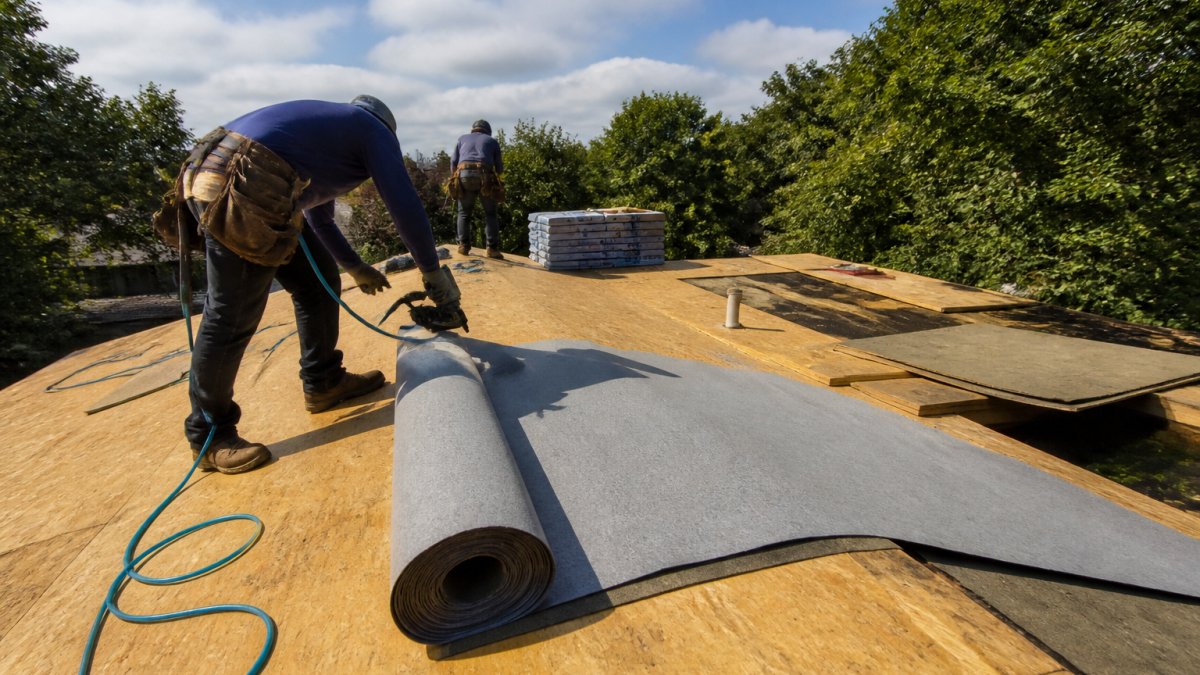
On roofing projects, the handoff between site preparation and roof installation is the point where unclear scope becomes visible, so confirm in writing who is responsible for staging, debris removal, and final grade before the roofing crew arrives.
Watch out: scheduling the roofing crew before compaction results and drainage checks are confirmed is one of the most common causes of rework, because a failed inspection after mobilization forces the crew to demobilize and return.
How to Evaluate a Site Preparation Contractor
Choosing the right contractor is one of the most consequential decisions in a construction project. Use these criteria when comparing candidates:
- Licensing and insurance: Confirm the contractor holds the required state and local licenses and carries liability and workers' compensation coverage. Verify licensing through the relevant state licensing authority.
- Relevant experience: Ask for examples of similar projects, particularly those with comparable soil conditions or lot size.
- Scope clarity: A written proposal should spell out the work included, the exclusions, and how changes will be handled.
- Communication: Pay attention to how promptly and clearly the contractor responds during the bidding stage. That pattern often continues through the project.
- References: Speak with past clients about schedule performance, cost accuracy, and how problems were resolved.
Be cautious of proposals that are dramatically lower than others without a clear explanation, since they may reflect a narrower scope or missing items rather than genuine savings.
Booking Your Site Preparation Assessment with M7 LLC
Every site preparation project starts with an accurate read on the ground conditions, the scope, and the schedule. M7 LLC provides construction and landscaping services, including site preparation, new construction, renovations, and grounds work for residential and commercial properties across Alabama.
Pricing depends on the size of the site, the grading and drainage work required, and the soil conditions. For current prices or a quote for your project, contact M7 LLC through our website. To discuss your project and schedule an assessment, contact M7 LLC through our website.
Frequently Asked Questions
What is the purpose of site preparation?
Site preparation readies a parcel for construction by clearing vegetation and debris, surveying the ground, and grading it so water drains away from the planned structure. Done properly, it creates a level, stable base for foundations and utilities. Because pricing depends on lot size, terrain, soil conditions and access, the most reliable way to understand the cost for your project is to request a site assessment and written quote from M7 LLC.
How does site preparation help prevent construction delays?
Most schedule slips on residential projects start with unexpected ground conditions, such as poor drainage, unsuitable soil or buried debris discovered after the foundation crew arrives. A thorough survey and soil assessment before work begins surfaces those issues early, so they can be planned for rather than halting the build. Clear scheduling of each phase, from clearing through grading, also keeps trades moving in sequence.
What steps are included in professional site preparation?
A typical process starts with a site survey and soil assessment, followed by vegetation and debris removal, excavation as needed, grading and compaction, and drainage planning. Final checks confirm the surface is level and ready for the next trade. Each step should be documented so property owners can see what was completed before construction begins.
How do you know when a site is ready for construction?
A site is ready when it has been surveyed, cleared of debris and vegetation, graded to the planned elevations, and compacted to a stable surface with working drainage. Property owners should receive a clear record of these checks before the foundation contractor mobilizes. Ask your site preparation contractor to walk the completed grade with you before signing off on the phase.