 ultimate-guide
Residential Landscaping Services for Investors: ROI Guide
Table of Contents
- Why Residential Landscaping Services Matter for Investors
- Landscaping ROI for Rental Properties
- Market Fragmentation and Service Scalability
- Low Maintenance Landscaping for Investment Homes
- Landscaping Maintenance Checklist for Landlords
- Vendor Vetting Criteria and Contractor Selection
- Building Long-Term Value Through Strategic Grounds Work
- Frequently Asked Questions
Last Updated: September 27, 2026
Why Residential Landscaping Services Matter for Investors
Curb appeal isn't cosmetic for rental properties, it's a financial lever. Properties with well-maintained grounds command higher rents, attract quality tenants, and reduce vacancy periods. This is where residential landscaping services for investors become a strategic asset rather than an expense line item.
The difference between a neglected yard and a maintained one often translates into 5-10% higher rental income for comparable units. Beyond rent premiums, landscaping directly protects your property's foundation, reduces soil erosion, and prevents drainage problems that cost thousands to repair. Investors who treat landscaping as preventive infrastructure rather than decoration see measurable returns on their portfolio.
At M7 LLC, we work with property owners who understand that grounds work isn't optional, it's part of asset management. The question isn't whether to invest in landscaping, but how to do it strategically and efficiently across multiple properties.
Landscaping ROI for Rental Properties
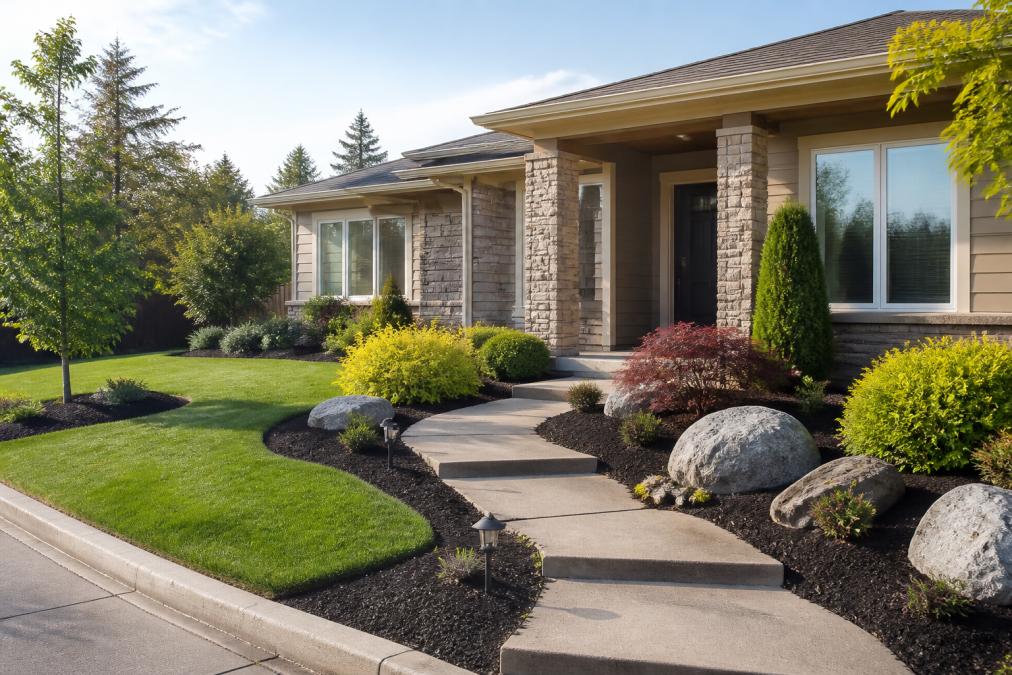
The secondary ROI comes from deferred repairs. Proper drainage, grading, and ground maintenance prevent water intrusion, foundation settling, and soil erosion, issues that cost $5,000-25,000 to remediate. A strategic landscaping investment of $1,000-3,000 annually across a property prevents these expensive problems before they start.
For investors managing multiple units, this compounds. Five properties with 5% higher rents plus reduced turnover and prevented foundation damage creates meaningful cash flow improvements. The landscaping becomes part of your property management strategy, not a discretionary expense.
Market Fragmentation and Service Scalability
The landscaping market remains highly fragmented compared to other property service sectors. Unlike roofing, HVAC, or electrical services where regional and national consolidators dominate, residential landscaping is still 85-90% small operators and local teams. This fragmentation creates distinct challenges and opportunities for investors managing multiple properties.
Why fragmentation matters for your portfolio:
Fragmentation means no single contractor typically has the infrastructure to manage landscaping across a geographically dispersed portfolio. A contractor excellent at spring cleanups in one neighborhood may lack equipment, crew capacity, or scheduling systems to handle consistent maintenance across five properties in different areas. This forces investors to either (a) hire multiple contractors and manage coordination, or (b) find a rare operator with portfolio-scale infrastructure.
The operational risk is real: a contractor who excels at one-time projects thinks in project cycles, not recurring revenue. They prioritize new customer acquisition over retention. When weather turns cold or seasonal demand drops, they pivot to other work or reduce crew size. Your winter maintenance gets deprioritized. Your spring maintenance gets delayed because they're overbooked with new spring cleanup projects. Inconsistency compounds across properties.
The scaling opportunity:
Investors with 3+ properties can negotiate favorable terms precisely because fragmentation means most contractors are hungry for consistent, year-round work. A contractor managing seasonal projects for 20 homeowners generates unpredictable revenue. A contractor managing recurring maintenance for 5 investment properties with documented schedules generates predictable cash flow. This predictability is valuable to them.
You can leverage this by bundling properties into a single service agreement with tiered pricing. Instead of negotiating five separate contracts, you offer one contract covering five properties with a guaranteed annual commitment. Contractors who understand recurring revenue models will discount this work because it reduces their acquisition costs and improves their cash flow forecasting.
Scaling across geographies:
For investors expanding into new markets, fragmentation means you'll need to vet and onboard new contractors for each region. This is where documented maintenance protocols become critical. You don't hire a contractor and hope they understand your standards, you provide a detailed service specification that any competent operator can execute. This standardization lets you scale without sacrificing consistency.
The best contractors for portfolio-scale work are those who have already managed multiple properties for other investors or property management companies. They understand seasonal planning, have systems for tracking work across locations, and know how to communicate status without requiring constant oversight. Ask prospective contractors directly: "How many properties do you currently manage for investors or property managers?" Their answer tells you whether they think in portfolio terms or project terms.
:::pro-tip When negotiating with a contractor for multiple properties, ask for a tiered pricing structure: lower per-property cost as you add more properties. A contractor managing five properties should offer 10-15% better rates than managing one property, because their acquisition cost per property drops and their crew utilization improves.
Low Maintenance Landscaping for Investment Homes
The most profitable landscaping strategy for investors is low-maintenance design. High-touch yards with extensive plantings, frequent pruning, and complex irrigation systems eat margin. Low-maintenance landscaping delivers the curb appeal and functional benefits without the operational overhead.
Effective low-maintenance approaches include:
- Native plantings that require minimal watering and fertilization
- Hardscape features (patios, walkways, defined beds) that reduce mowing and maintenance
- Simplified irrigation systems or rain-based watering that reduce labor costs
- Mulched beds instead of high-maintenance ornamental plantings
- Lawn areas sized for efficient mowing rather than intricate landscaping
The goal is aesthetic appeal with minimal ongoing labor. A property with defined hardscape, healthy turf, and simple plantings looks professional and requires 30-40% less maintenance than a complex landscape design.
This approach also simplifies tenant communication.
:::pro-tip Native plants adapted to your region require 40-60% less water and fertilizer than ornamental species. Over five years, this compounds into significant savings while maintaining curb appeal.
Landscaping Maintenance Checklist for Landlords
Effective landscaping maintenance follows a seasonal rhythm. This checklist helps investors track what needs attention and when:
| Maintenance Task | Frequency | Best Season | Impact |
|---|---|---|---|
| Lawn mowing | Weekly (growing season) | Spring-Fall | Curb appeal, tenant satisfaction |
| Mulch refresh | 1-2x annually | Spring, Fall | Weed control, moisture retention |
| Hardscape inspection | Quarterly | All seasons | Prevent erosion, drainage issues |
| Drainage system check | Twice yearly | Spring, Fall | Prevent foundation water damage |
| Tree/shrub trimming | 1-2x annually | Late winter, early fall | Safety, health, appearance |
| Gutter cleaning | Twice yearly | Spring, Fall | Prevent water damage, foundation issues |
| Irrigation system maintenance | Spring, Fall | Seasonal | Efficiency, water conservation |
| Fertilization | 2-4x annually | Seasonal | Turf health, appearance |
Vendor Vetting Criteria and Contractor Selection
Choosing the right landscaping contractor for investment properties is fundamentally different from hiring for a personal home. You're not evaluating aesthetics or personal preference, you're evaluating whether this contractor will protect your asset, maintain your rental income, and operate consistently across your portfolio. Most investors apply homeowner-focused criteria and end up with contractors who can't scale.
The investor-specific vetting framework:
1. Portfolio experience and recurring revenue mindset
2. Documented maintenance protocols and asset protection focus
3. Communication systems and transparency
- Written confirmation after each visit (what was done, what's scheduled next, any issues observed)
- A system for flagging problems that need investor attention (drainage concerns, pest damage, tree health issues)
- Clear escalation process for unexpected work or cost overruns
- Accessibility for questions between scheduled visits
4. Insurance, bonding, and liability clarity
5. Pricing transparency and portfolio discounting
Understand their pricing model completely before committing. Ask:
- Do they charge per visit, per property, hourly, or flat monthly?
- What's included in the base price versus what costs extra?
- How do they handle seasonal variations (more mowing in spring/summer, less in fall/winter)?
- What happens if you add a property mid-year?
- Do they offer portfolio discounts for multiple properties?
6. Equipment, crew stability, and capacity
7. Problem-solving and initiative
Red flags to eliminate immediately:
- Unwilling to provide references from other investors or property managers
- Vague about what they do or how they charge
- No written maintenance schedule or service agreement
- No insurance or bonding
- Primarily seasonal work with no year-round crew
- Unwilling to discuss communication protocols or problem escalation
- Pricing that varies wildly from other quotes without explanation
The goal: a true partner, not a vendor
Building Long-Term Value Through Strategic Grounds Work
Residential landscaping services for investors aren't about creating magazine-worthy yards. They're about protecting your asset, increasing rental income, and reducing long-term maintenance costs. The right approach to grounds work compounds over years, lower vacancies, higher rents, fewer emergency repairs. M7 LLC brings professional construction and landscaping services designed specifically for investment properties. We handle comprehensive site preparation, grounds work, and maintenance protocols that align with your portfolio strategy.
Frequently Asked Questions
How much does professional landscaping improve property value for rental investments?
Professional landscaping directly impacts curb appeal and tenant satisfaction, which influences both lease rates and retention. Well-maintained grounds reduce vacancy periods and justify higher rental rates. Property investors typically see returns through faster tenant acquisition, longer lease terms, and reduced turnover costs. The exact impact depends on your local market, property condition, and the scope of landscaping improvements.
What landscaping services provide the best return on investment for rental properties?
Recurring maintenance services, lawn care, irrigation management, and seasonal upkeep, deliver consistent ROI by maintaining asset value and tenant satisfaction. One-time improvements like hardscape design or tree care enhance property valuation. Commercial landscaping services often provide better margins than residential-only providers. Focus on service level agreements that bundle routine maintenance with preventive care to maximize efficiency and reduce emergency costs.
How often should investors schedule routine grounds maintenance?
Most rental properties benefit from weekly or bi-weekly maintenance during growing seasons and monthly service during dormancy. Frequency depends on climate, tenant expectations, and local market standards. Annual maintenance contracts with professional landscaping providers ensure consistent care without management overhead. Regular maintenance protects your asset, reduces long-term repair costs, and supports tenant retention and property valuation.
What should investors look for when hiring a landscaping company?
Evaluate contractors on operational efficiency, service scalability, and ability to manage multiple properties. Request references from other investors, review their equipment and technology capabilities, and confirm they carry liability insurance. Assess their understanding of asset protection and landscape maintenance standards. Ask about communication frequency and how they handle service interruptions. Compare their approach to labor management and recurring revenue models, this indicates whether they can reliably service your portfolio long-term.