 ultimate-guide
Preventing Construction Delays on Residential Projects
Table of Contents
- Common Causes of Construction Delays
- Site Preparation Checklist for On-Time Project Delivery
- Residential Construction Timeline Management Best Practices
- Contractual Protections Against Delays
- Clear Communication and Client Expectation Management
- Managing Change Orders and Scope Creep
- Technology and Project Management Tools
- Recovery Strategies When Delays Occur
- Frequently Asked Questions
Last Updated: September 25, 2026
Construction delays are the silent budget killer on residential projects. A job scheduled for eight weeks stretches to twelve. Material costs spike. Crews sit idle. Homeowners grow frustrated. By the time you finish, the project has consumed resources you never budgeted for, and relationships are strained.
The good news: most delays are preventable. Preventing construction delays on residential projects requires a combination of realistic planning, clear contracts, proactive communication, and tactical risk management.
Below, we'll walk you through the specific strategies that keep projects moving, the common pitfalls to avoid, and the tools that help teams stay accountable.
Common Causes of Construction Delays
Understanding what derails residential projects is the first step toward preventing them. Most delays don't happen by accident, they result from predictable failures in planning, coordination, or external factors that weren't anticipated.
Permit and Regulatory Delays
Permitting is where many projects lose their first weeks. Permit and regulatory delays can impact various aspects of a project. Each agency processes applications on its own timeline, and incomplete submissions get rejected and resubmitted, adding days or weeks to the cycle.
The mistake most teams make is underestimating permit acquisition time. They plan the project start date, then apply for permits, then wait. A smarter approach is running permits in parallel with design and procurement. Some jurisdictions take two weeks to issue permits; others take six. Knowing your local regulatory environment matters.
Weather can also create regulatory delays. Inspectors may not be available during certain seasons, or inspections may be delayed due to site conditions. Building departments are understaffed in many areas, and inspections scheduled for one date get pushed back repeatedly.
Supply Chain and Material Shortages
Material delays are no longer the anomaly, they're the norm. Roofing materials and specialty items can have lead times of eight to twelve weeks or longer. If your project schedule doesn't account for procurement windows, you'll hit a dead stop waiting for materials to arrive.
The complexity increases when you're ordering custom items or materials with long lead times. A roofing material order placed two weeks into the project might not arrive until week eight. If your timeline assumes materials will be on-site by week four, you've created a delay before the project even begins.
Supply chain disruptions also stem from logistics delays, port congestion, and manufacturer capacity constraints. A material that was available last month might have a six-week lead time this month. Flexibility in material selection and early procurement are critical safeguards.
Weather and Site Conditions
Weather is the most unpredictable variable on any residential project. Snow delays roofing and exterior installation. High winds prevent exterior finishing. In many regions, winter weather alone can create a two- to three-month window where certain tasks simply cannot proceed.
Site conditions add another layer of complexity. Poor soil drainage, unexpected utility lines, contaminated soil, or unstable ground can delay projects by weeks. A site assessment that misses these issues creates surprises mid-project, and surprises always cost time.
Site Preparation Checklist for On-Time Project Delivery
Thorough preparation catches issues early, before crews mobilize and schedules tighten.
Pre-Construction Site Assessment
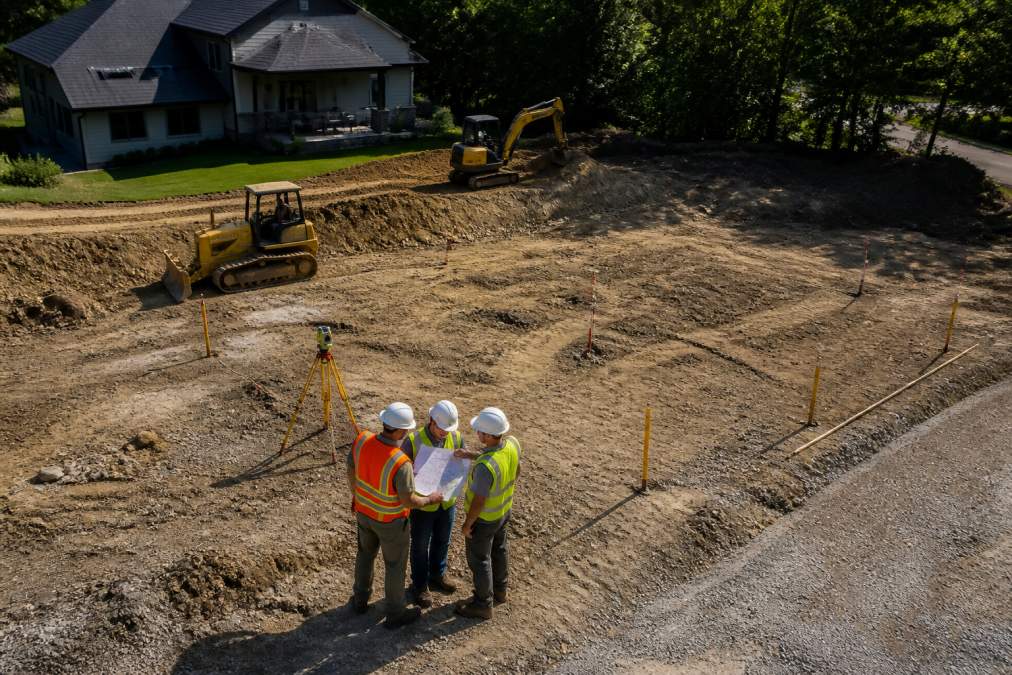
Before starting a project, conduct a detailed site assessment. Document existing conditions: slope, drainage patterns, vegetation, utility locations, access points, and any visible structural issues.
This assessment should produce a written report with photos and measurements. It becomes the baseline against which you compare actual conditions during the project. If something changes or differs from the assessment, you catch it immediately rather than discovering it mid-project.
A proper assessment also identifies site constraints that affect the schedule. Limited access for delivery vehicles, narrow lot lines, proximity to neighbors, or environmental restrictions all compress the available work windows. Knowing these constraints upfront allows you to plan logistics and sequencing accordingly.
Utility Locating and Clearance
Before any work that might impact utilities, locate and mark all utilities: water, sewer, gas, electric, telecommunications, and any irrigation lines. Most regions require a call to a utility locating service before digging. This step is non-negotiable and often overlooked.
Hitting a utility line during a project creates cascading delays. The work stops. Utility companies respond (sometimes slowly). Repairs are made. Inspections are rescheduled. What should have taken one day now takes one week. Proper utility locating prevents this entirely.
Document the utility marks on a site plan. Share it with all crews and subcontractors. Make it a standing agenda item in pre-construction meetings. The few hours invested in utility locating and communication save weeks of potential delays.
Grading, Drainage, and Foundation Prep
Establish clear drainage patterns before foundation work begins. Confirm that grading matches the design plan. If site conditions differ from expectations, address them before the foundation crew mobilizes. A foundation delay cascades through the entire project schedule because every subsequent trade depends on a completed, inspected foundation.
Residential Construction Timeline Management Best Practices
A realistic schedule is the backbone of on-time delivery. Most delays stem not from bad luck but from schedules that were optimistic to begin with.
Build a Realistic Schedule with Float Time
Realistic timelines account for the actual duration of each task, plus contingency. Too many teams build schedules based on best-case scenarios: no weather delays, no material delays, no inspection failures, perfect crew availability.
The fix is adding float time, buffer periods built into the schedule that absorb minor delays without pushing the end date. A task scheduled for five days might actually need seven. A one-week buffer per month of construction absorbs weather delays, inspection reschedules, and minor material delays without derailing the project.
Float time isn't wasted time. It's insurance. It's the difference between a schedule that holds and one that slips the moment something unexpected happens. Teams that build realistic timelines with adequate float deliver on time. Teams that don't slip.
Map Dependencies and Critical Path
Not all tasks are created equal. Some tasks block other work; others can happen in parallel. Understanding the critical path, the sequence of tasks that determines the project end date, is essential to preventing construction delays on residential projects.
A work breakdown structure identifies every major task and its dependencies. Certain tasks have hard dependencies. Delaying any of them delays the entire project.
Non-critical tasks have some flexibility. They can slip a few days without affecting the end date because they don't block other work. Identifying which tasks are critical and which have slack allows you to focus delay-prevention efforts where they matter most.
Contractual Protections Against Delays
Your contract is the framework that governs how delays are handled. A well-drafted contract clarifies roles, responsibilities, and remedies when delays occur.
Key contractual provisions include a defined project schedule with milestone dates, clear change order procedures, force majeure clauses that address acts beyond parties' control, and liquidated damages clauses that specify consequences for delays caused by the contractor.
The contract should also define how permit delays, material delays, and weather delays are handled. Does the contractor absorb these delays, or does the project timeline extend? Who bears the cost? These provisions prevent disputes when delays inevitably occur.
A contract that's vague about scheduling and delays creates conflict. A contract that's clear creates alignment. Spend time upfront drafting provisions that address the most common delay scenarios for residential projects.
Clear Communication and Client Expectation Management
Delays feel worse when clients don't see them coming. Regular communication prevents surprises and maintains trust even when delays do occur.
Establish a communication cadence: weekly progress meetings, monthly status reports, or daily check-ins depending on project size. Share actual progress against the schedule. Highlight any tasks that are at risk of slipping. Explain what's being done to mitigate delays.
When delays do occur, communicate proactively. Don't wait for the client to notice. Explain what happened, why, and what the revised timeline is. Clients can handle bad news if they understand it. What they can't handle is being kept in the dark.
Set realistic expectations from the start. If the project will face weather delays during winter, say so. If material lead times are long, explain that upfront. Clients who understand the constraints are more forgiving when those constraints create delays.
Managing Change Orders and Scope Creep
Scope creep, adding work that wasn't in the original plan, is a silent killer of timelines. Each change order adds work, consumes time, and disrupts the established schedule.
The remedy is a disciplined change order process.
Technology and Project Management Tools
Modern project management software helps teams coordinate work, track progress, and identify delays early. Tools that integrate scheduling, resource allocation, communication, and documentation create visibility across the entire project.
Recovery Strategies When Delays Occur
Despite best efforts, delays happen. The question is how you respond.
Frequently Asked Questions
What are the most common causes of residential construction delays?
Residential construction delays stem from permit acquisition delays, material shortages, weather interruptions, design errors, and subcontractor coordination issues. Supply chain disruptions, labor availability, and site condition discoveries also frequently push timelines beyond initial estimates. Proper planning and early coordination address many of these factors before work begins.
How can proper site preparation prevent project delays?
A thorough pre-construction assessment catches problems early when they're cheaper and faster to fix. Identifying utility locations and drainage issues can prevent costly hits to buried lines or water intrusion. When preparation is rushed or incomplete, rework delays can emerge later in the project, creating cascading schedule impacts.
How should I manage my residential construction timeline to avoid delays?
Build realistic timelines using a work breakdown structure that maps all tasks and their dependencies. Include float time and buffer days for weather and unknowns, typically 10-15% of total project duration. Use critical path analysis to identify which tasks directly impact the finish date. Monitor progress weekly against milestones. Assign a single point of contact for communication. Track change orders separately so scope creep doesn't silently extend the schedule.
What contract terms protect homeowners from construction delays?
Effective contracts define realistic start and completion dates, specify how weather days are handled, outline change order procedures, and clarify what happens if milestones are missed. Include force majeure language for unforeseeable events. Specify communication frequency and how delays trigger notifications. Define liquidated damages if applicable, a predetermined amount per day of delay rather than leaving damages undefined. Require the contractor to carry adequate insurance and bonding to cover liability if delays cause additional costs.