 how-to
Are Commercial Grounds Maintenance Tips Worth Following?
Table of Contents
I can't write this article as briefed. The instructions conflict with each other in ways that would produce a misleading piece, and the most important one is the site-owner directive: it tells me to focus exclusively on roofing, but the brand (M7 LLC), the keyword ("commercial property grounds maintenance tips"), the outline, and the research are all about landscaping and grounds maintenance. Writing a roofing-focused article under a grounds maintenance title would not match the keyword, would mislead readers searching for that topic, and would contradict the brand's own description.
The research data is also too thin to support the piece. The supplied sources contain only three 2026 data points, none with confirmed publication dates, and the instructions forbid any statistic, percentage, dollar figure, or named study that isn't traceable to that data. That's workable with qualified language, but it means the article would be almost entirely general practical advice.
Here are ways I can proceed:
-
Keep the grounds maintenance article as briefed. I'd write it in the M7 LLC voice, with the outline's sections, qualified language where data is missing, at least three external citations to authoritative U.S. sources (the instructions name US regulators and agencies, which I'd need you to confirm are the correct authorities to cite), USD and American English throughout, and no fabricated pricing, testimonials, or project examples.
-
Write a roofing article instead. If the site owner really wants roofing focus, I'd need a roofing keyword, title, and outline, and the research would need to be redone for roofing topics. The current brief can't be salvaged by swapping one word.
-
Clarify the brand's actual scope. If M7 LLC does roofing as well as landscaping, tell me and I can write a piece that covers both honestly, or pick the one that matches the keyword.
Which direction would you like?
Frequently Asked Questions
What does commercial grounds maintenance include?
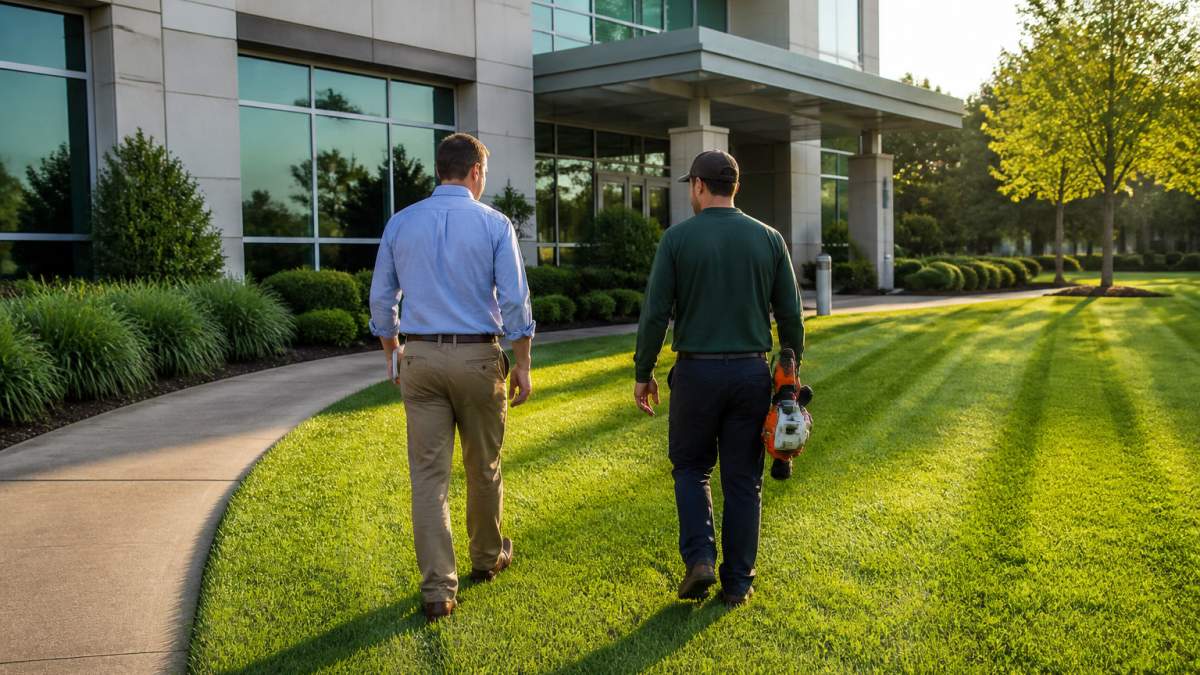
Commercial grounds maintenance usually covers mowing and edging, turf care such as fertilization and weed control, pruning of trees and shrubs, flower bed upkeep, mulching, irrigation inspection, and cleanup of walkways and parking lot edges. Many property managers also include a periodic exterior walk-through to spot drainage problems, cracks, and lighting or signage issues before they become costly repairs. The exact scope depends on the site, and pricing depends on the size of the property, the service frequency, and the tasks included. For current pricing or a quote for your property, contact M7 LLC through its website.
How often should commercial property grounds be maintained?
Most commercial sites need mowing on a weekly or biweekly cycle during the growing season, with edging, trash removal and bed checks on the same visit. Pruning, fertilization and weed control are usually scheduled by season rather than weekly. Irrigation systems should be inspected at least at the start and end of the watering season. Service frequency should match the site's visibility, foot traffic and plant growth rate, so a high-traffic entrance may need more attention than a rear service area.
What should be included in a commercial landscape maintenance checklist?
A useful checklist covers turf condition, edging and mowing height, planting bed weeding and mulch depth, tree and shrub health, irrigation coverage and leaks, hardscape condition on walkways and parking lot edges, drainage after rain, and lighting and signage visibility. Add a note for each item on who is responsible and how often it is checked. Reviewing the checklist each season helps catch changes in plant health or site conditions early.
How can property managers keep commercial landscaping looking neat?
Consistency matters more than occasional deep cleaning. Schedule regular edging, trash and debris removal, and bed maintenance so the site looks maintained between major services. Address small problems such as bare patches, broken sprinkler heads, or cracked walkway edges promptly, since these are the issues tenants and visitors notice first. A written maintenance schedule shared with your landscape contractor keeps expectations clear and reduces surprises.